

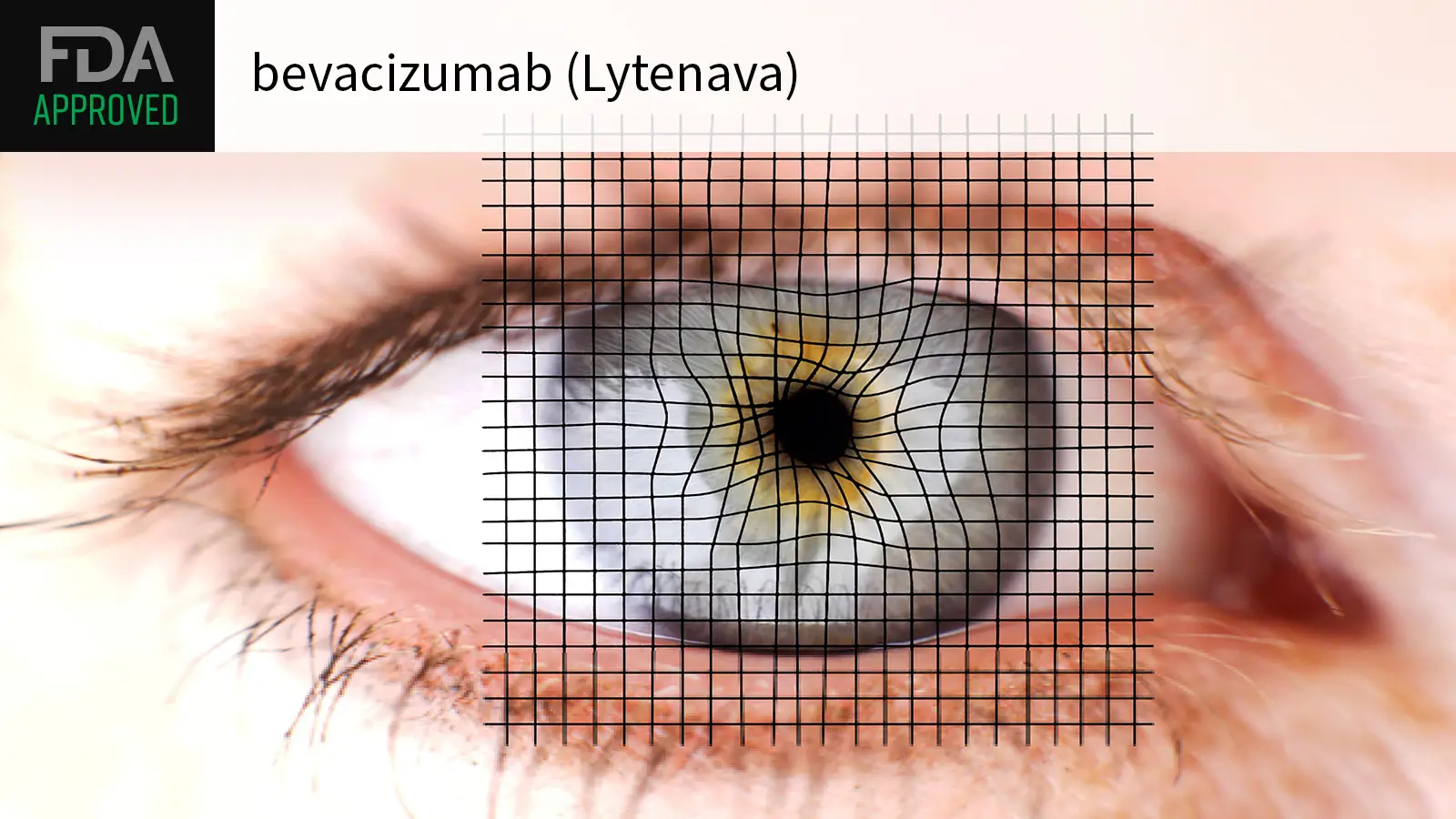
The FDA approved the first formulation of bevacizumab specifically for the treatment of neovascular (wet) age-related macular degeneration (nAMD), Outlook Therapeutics announced on Friday.
The approval of bevacizumab-vikg (Lytenava) follows more than 20 years of off-label use of compounded formulations of the VEGF inhibitor for nAMD, a chronic, progressive retinal disease that is one of the leading causes of severe vision loss in older adults. The first clinical application of bevacizumab for nAMD occurred just a year after bevacizumab (Avastin) received initial FDA approval in 2004 as a treatment for metastatic colorectal cancer.
Given FDA’s regulations around compounded drugs, the approval will likely increase costs for what had been an affordable anti-VEGF option in nAMD. A substantially lower dose is needed in nAMD than in cancer patients, so off-label bevacizumab can cost roughly $50 to $60 for a single intravitreal injection. In the U.K., the list price of Outlook Therapeutics’s bevacizumab product is about $625 per dose.
The company’s product overcame a 2023 rejection from the FDA that at the time included manufacturing issues and concerns about the clinical evidence.
“The retina community has been waiting a long time for access to an FDA-approved, ophthalmic formulation of bevacizumab to treat patients suffering from wet AMD in the United States,” said Firas Rahhal, MD, of Good Samaritan Hospital in Los Angeles, in the company announcement. “It is exciting news that Lytenava will soon be an option for patients suffering from this disease.”
The recommended dose of bevacizumab for nAMD is 1.25 mg (0.05 mL of 25 mg/mL) once monthly, and Outlook Therapeutics said its product will be available to patients in the U.S. before the end of 2026.
According to the labeling, the most common adverse reactions (≥1%) reported in patients receiving this drug were conjunctival hemorrhage (4%), eye pain (2%), and vitreous floaters (2%).
The drug is contraindicated in patients with ocular or periocular infections, active intraocular inflammation, and known hypersensitivity to bevacizumab products or any of the ingredients.




Leave a Reply