

Overview
Work-related injuries are common among healthcare workers. The healthcare and social assistance industry sector tracks injury and illness rates among healthcare workers. This sector has one of the highest rates of work-related injury and illness cases requiring days away from work.1
Work-related musculoskeletal disorders (WMSDs) often result in days away from work for healthcare workers.2 Overexertion injuries, a leading cause of WMSDs, affects a wide range of healthcare workers, including nursing assistants2 and registered nurses.3
The single greatest WMSD risk factor for healthcare workers is patient handling. Patient handling includes manual lifting, moving, and repositioning of patients, residents, or clients.
Practicing safe patient handling is key to preventing WMSDs among healthcare workers.
Prevention steps and strategies
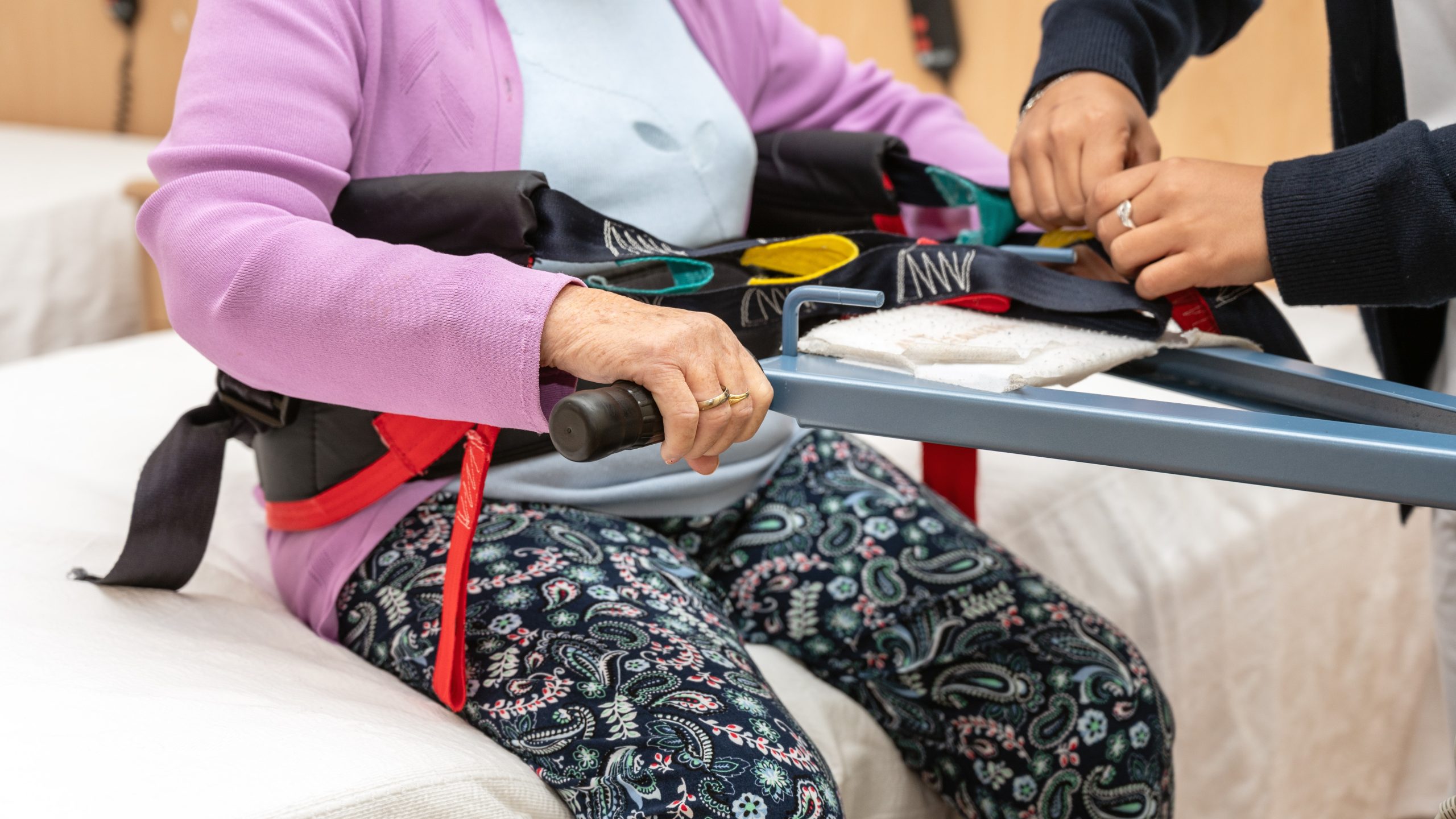
Safe patient handling and mobility (SPHM) technology involves using assistive lifting devices to help healthcare workers perform patient handling tasks. Both employers and healthcare workers can take action to use SPHM technology properly and prevent injuries from handling and moving patients.
Prevention strategies for employers
Employers can help prevent WMSDs by:4
- Evaluating current policies and procedures to determine WMSD risk.
- Providing easily accessible assistive lifting devices to workers. 5
- Training workers on how to use assistive lifting devices properly.
- Encouraging and promoting the use of assistive lifting devices.
- Implementing a safe patient lifting, handling, and movement program.
Prevention strategies for workers
Workers can reduce their risk of WMSDs by:4
- Following set rules and procedures.
- Using ergonomic lifting devices.
- Participating in regular training.
Use the guide
Interested in building an ergonomics program? Visit the NIOSH Elements of Ergonomics Program website to learn about the seven steps to evaluating and addressing musculoskeletal concerns in the workplace.
Why this method is important
SPHM technology can reduce the risk of healthcare workers’ injury and strain. Using assistive lifting devices allows workers to perform patient handling tasks without risking injury to themselves or their patients6.
Next steps for researchers
Ergonomics research tends to be very collaborative. Partnerships such as the National Occupational Research Agenda (NORA) help guide research in unknown areas of SPHM to better help workers.
Most of the injury prevention research so far has focused on handling average patients in standard hospital or nursing home settings. Ergonomics research is now exploring how to prevent patient handling injuries among healthcare workers in unique settings and situations. Some of these include:
- Preventing patient handling injuries in home healthcare settings.
- Addressing challenges of moving patients during emergency response.
- Identifying research needs in bariatric patient handling.7
- Evaluating new assistive devices such as exoskeletons.
Past research, including NIOSH research, has helped to inform safe patient handling standards or legislation. These include laws in many states requiring or promoting the use of safe patient handling programs in health care settings.
Learn more
A list of state laws and legislation.
Resources
NIOSHTIC-2 search
See the NIOSHTIC-2 database search results on SPHM. NIOSHTIC-2 is a database of occupational safety and health publications funded in whole or in part by NIOSH.
Health Hazard Evaluation reports
Search the NIOSH Health Hazard Evaluation (HHE) Reports for content related to ergonomics.
NIOSH Science Blog
Read the NIOSH Science Blog and share your comments.
Featured resources and organizations
This page describes the HCSA Program’s research priorities, accomplishments, and future direction.




Leave a Reply