

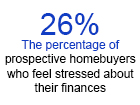
Prospective homebuyers are entering the second half of 2026 feeling optimistic about their personal finances and their path to homeownership, according to a new survey from Veterans United Home Loans. The share of prospective buyers who feel stressed about their finances fell to 26 percent, while 49 percent say they feel at ease. Future optimism also held firm, with 65 percent of buyers expecting to be personally better off a year from now.
“Buyers aren’t waiting for the market to feel perfect,” said Chris Birk, vice president of mortgage insight at Veterans United Home Loans. “They’re feeling better about their finances, finding ways to navigate affordability challenges and moving forward on timelines that work for them. That growing sense of readiness is helping turn homeownership from a long-term goal into a more immediate plan.”
Veteran and service member respondents are feeling strong about their finances this quarter. The share who feel stressed fell to 19 percent, down eight percentage points from last quarter, while 54 percent say they feel at ease. That confidence is carrying over into homebuying readiness, with 68 percent saying buying a home feels within reach and 47 percent saying they would rather buy now and refinance later.
Civilian respondents are showing mixed signals. Financial stress among civilians rose eight percentage points in the second quarter, with just 38 percent saying they feel at ease about their finances. Even so, civilian future optimism held steady, with 62 percent expecting to be personally better off a year from now.
Among prospective homebuyers, 73 percent plan to purchase within the next year, up slightly from last quarter, and 62 percent say buying a home feels within reach. Four in 10, or 41 percent, say they would rather buy now and refinance later than wait for conditions to improve.
Among all buyers planning to purchase within the next year, 19 percent intend to buy within the next three months. The seven- to 12-month window grew to 37 percent, up from 34 percent a year ago, indicating strong and sustained near-term commitment to buying. Veterans and service members are moving on a faster timeline than their civilian counterparts. Forty-three percent of veterans and service members plan to purchase within the next six months, compared with 22 percent of civilian buyers.
Artificial intelligence has become a common part of the homebuying process for prospective buyers, with nearly half, or 45 percent, saying they have used AI to assist with buying a home, up from 40 percent in the first quarter. The most common uses for AI among buyers were checking property values, at 41 percent; learning about housing trends, at 36 percent; and searching for homes by inputting specific criteria, at 32 percent.
Among veterans and service members who use AI, 52 percent use it for savings planning and 38 percent for credit improvement guidance, compared with 46 percent and 34 percent of civilian buyers, respectively. Across both groups, buyers view AI as a complement to human expertise rather than a replacement, with 77 percent agreeing it should serve as a supporting tool rather than the primary decision-maker in the homebuying process.
While affordability and market conditions continue to shape the homebuying landscape, the latest survey suggests prospective buyers are becoming increasingly optimistic about their ability to achieve homeownership.




Leave a Reply