

Welcome to Culture Clinic, MedPage Today‘s collaboration with Northwell Health to offer a healthcare professional’s take on the latest viral medical topics.
As more young men turn to “looksmaxxing” to try to improve their physical attractiveness through diet, exercise, and supplementation, one trend has clinicians concerned that they may be putting themselves at risk for gout.
A “carnivore diet” involves eating lots of red meat to support muscle growth, but this can also raise the risk of this painful inflammatory arthritis once thought of as the “disease of kings.”
And indeed, gout is on the rise in young people. A 2025 study in PLoS One found that from 1990 to 2021, gout among young people ages 15 to 44 rose from 194.23 to 245.07 per 100,000.
While these data ended before “looksmaxxing” exploded in popularity, eating too much of foods that contain purine is a major risk factor for developing gout, said Adam Bitterman, DO, chairman of the department of orthopedic surgery at Northwell’s Huntington Hospital in Huntington, New York.
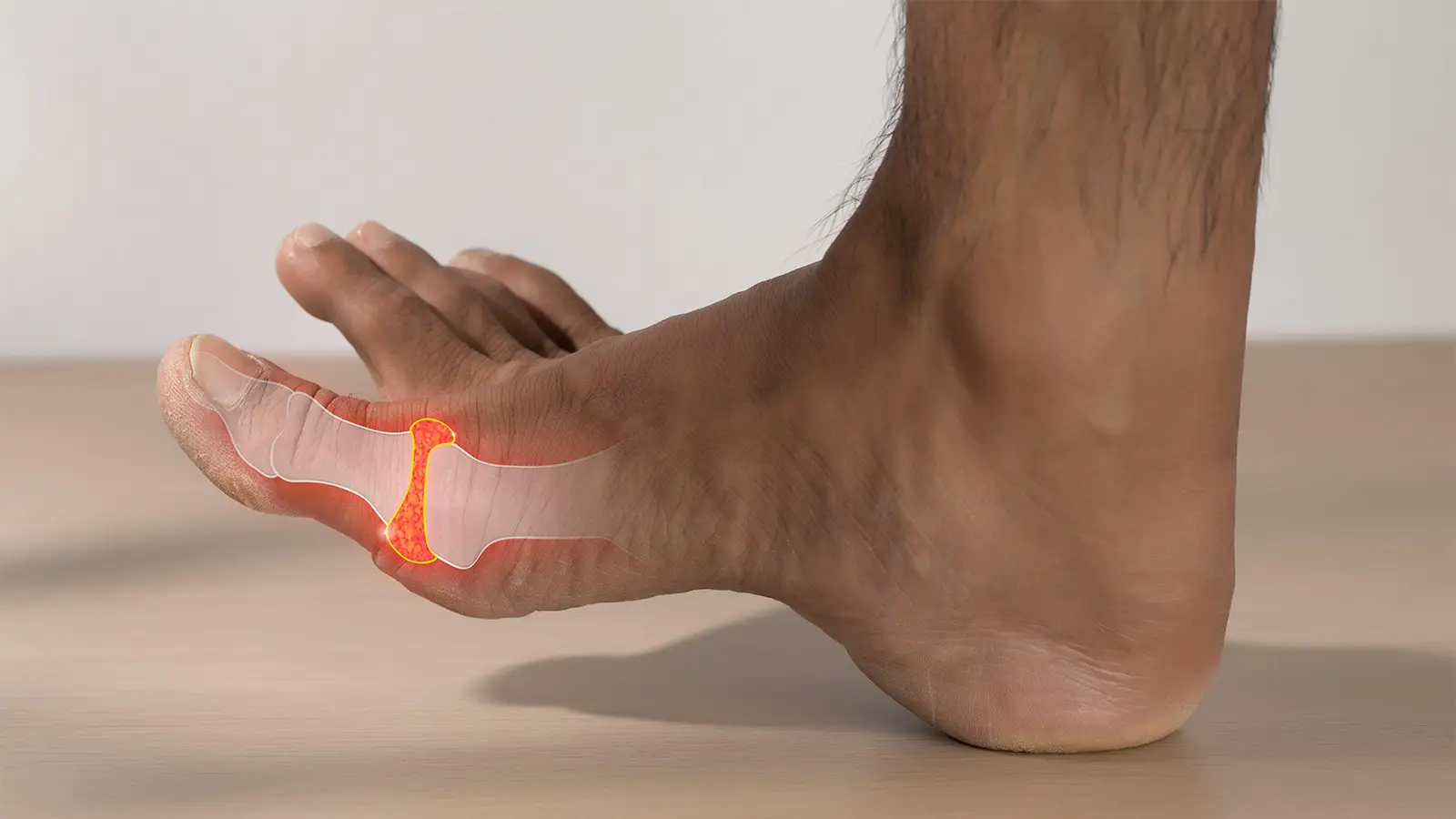
Purines are compounds that naturally occur in red meats, organ and game meats, some seafood, and some alcohols. When bodies break down purines, uric acid is created as a waste product. Gout is caused by crystalline deposits of uric acid, Bitterman said.
“From a high-red meat diet, you get an increase in purines … which can ultimately lead to the uric acid buildup, which can then become crystals in the joints,” he told MedPage Today. This then leads to “the pain, swelling, inflammation, and ultimately the inflammatory arthropathy.”
He noted, however, that there isn’t a cut-and-dry threshold for how much purine is too much.
Gout generally starts “as red, hot, swollen big toe joints” at the metatarsophalangeal joint, Bitterman said, but it can also develop in other locations and bigger joints, like the ankle or knee. As gout progresses, it can become painful for a patient to walk or put weight on the extremity.
At these early stages, patients should come in for an evaluation, he said. If someone has early signs and symptoms of gout, and through conversations with their doctors are able to determine that their diet is the culprit, cutting back on purine-rich foods can help significantly.
Otherwise, Bitterman said treatment usually begins with anti-inflammatory medicines like colchicine, ibuprofen, or naproxen sodium. Steroids, like methylprednisolone or prednisone taper packs, are another strategy to manage gout, as is the urate-lowering medication allopurinol.
Gout can mimic an infection, Bitterman said, so sometimes advanced imaging is needed to ensure something else isn’t going on. X-rays confirm that the patient doesn’t have a fracture, and dual-energy CT scans and MRIs can visualize uric acid crystal deposits. Plus, health histories and physicals can confirm there are no other signs of infection in the bloodstream.
Over time, if uric acid builds up in the joints and isn’t excreted properly, “you can have a breakdown of the bones of those joints” and “the cartilage can get worn down,” Bitterman said.
“If the buildup of crystals becomes so severe, it can lead to a ‘toothpaste’ accumulation inside the joint that needs to be drained and or washed out,” he added.
For that, a surgeon makes a few holes in the skin overlying the joint and through either arthroscopic or a more open approach evacuates the crystals. After recovering from surgery, patients have “significant improvement” but still need maintenance to prevent uric acid from building up again.
“If gout got to a critical level where a surgery is involved, then you know you’ve essentially failed the maintenance protocol, and so you have to revisit that with your rheumatologist or your primary care doctor,” Bitterman said.
As a surgeon, Bitterman said he most commonly sees gout in his male patients between the ages of 55 and 70. But in general, the two groups most at risk for gout are those who have increased uric acid buildup in their blood from intake — like lots of purine-containing foods — and those whose kidneys struggle to get rid of uric acid.
Some young men have leveraged social media to share their experiences with gout and remind their peers that even young people can develop gout — and urge them to take precautions to lower their risk.




Leave a Reply