

By Michael C. Couch, MBA, EDAC, LEED AP BD+C
For dental professionals, ergonomics is hardly a new conversation. Clinicians are routinely reminded to maintain neutral posture, adjust their seating, stretch between patients and pay attention to how they position themselves throughout the day.
Those habits matter, but they only address part of the problem.
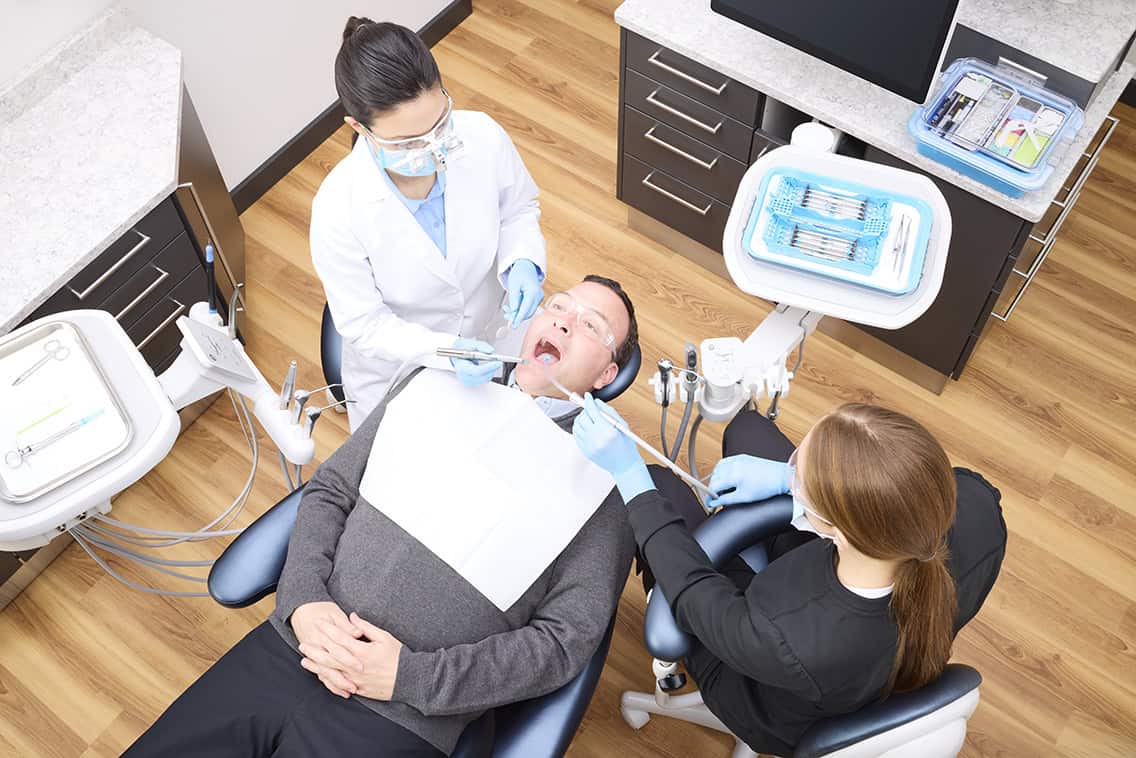
Thoughtful operatory design can help support positioning, access and workflow for the dental team. Photo courtesy of Midmark.
When the operatory layout itself requires clinicians to repeatedly reach, twist, lean or reposition to deliver care, even the best ergonomic habits can be difficult to maintain.
Ergonomics should not be treated only as something clinicians practice. It should also be something the operatory supports.
Why Good Habits Aren’t Always Enough
Dental care presents an inherent ergonomic challenge. Clinicians perform precise tasks for extended periods while maintaining visibility and access to the oral cavity and interacting with instruments, handpieces, delivery systems, lighting, cabinetry and technology.
A clinician may know what neutral posture looks like but maintaining it becomes more difficult if the patient cannot be positioned appropriately. Frequently used instruments sitting outside the natural working zone can create repeated reaching or twisting. Poorly positioned lighting or equipment can introduce additional movement.
Individually, these actions may seem insignificant. Repeated across procedures, patients, days and years, they become part of the clinician’s daily physical workload.
Stretching and posture awareness can help clinicians manage that workload. Better operatory design can help reduce it at the source.
Shift the Focus from Behavior to Design
Instead of asking only, How should the clinician move? Practices can also ask, How does the operatory require the clinician to move?
This broader perspective turns ergonomics into a systems and workflow discussion.
Consider the entire treatment zone: the dental chair, delivery system, light, cabinetry, seating, instruments and technology. Each component affects where clinicians work, what they can reach and how easily they can adjust their position.
Patient positioning is important to that equation. A dental chair with a broad range of movement and positioning options can help bring the patient to the clinician rather than requiring the clinician to continually adapt to the patient.
The same principle applies to the delivery system. Handpieces and controls positioned within a comfortable reach can help limit unnecessary stretching or twisting. Repositionable equipment can accommodate different users and procedures.
Lighting also plays a role. A light that can be easily positioned across treatment positions can support visibility without requiring clinicians to compensate with their own posture.
No single feature creates an ergonomic operatory. The value comes from how those features work together.
Design Around the Workflow
Ergonomic design is not simply about placing equipment according to a floor plan. It requires understanding how care actually happens within the room.
Where do the clinician and assistant work? Which items are accessed most often? Does someone have to turn away from the patient to reach supplies? Are team members repeatedly crossing paths?
Observing a procedure from beginning to end can reveal routine movements the team may no longer notice. Supplies stored beyond easy reach or poorly positioned cabinetry can encourage repeated reaching or twisting.
This becomes particularly important when an operatory is shared. Dentists, hygienists and assistants differ in height, reach and preferred working position. Adjustable equipment and seating can help the room accommodate the people using it rather than requiring them to fit a fixed setup.
Think Beyond Individual Pieces of Equipment
Practices often evaluate major equipment purchases individually: the chair, delivery system, light, cabinetry and technology each have their own specifications and features.
When these components are designed and positioned to complement one another, the operatory can function as a more cohesive workspace. The clinician can position the patient, access instruments, adjust illumination and move around the treatment area with fewer movements.
Midmark, for example, designs operatory equipment to work together to support positioning, access and workflow. Its next-generation dental chair offers 19 inches of vertical travel and left/right rotation, while delivery systems and lighting provide easy, flexible positioning. A column-mounted delivery system with 16 inches of vertical travel also helps support a Sit-to-Stand dental workflow, while adjustable stools feature contoured seats with waterfall edges to help distribute weight and relieve pressure on the thighs.
Integration can extend beyond physical positioning. Controls and technology that simplify common tasks can reduce the number of steps required during a procedure. Eliminating a reach, turn or interruption may seem minor, but reducing repeated actions helps create a more efficient and comfortable working environment.
The goal is not to eliminate movement. Dentistry will always require clinicians to move and adapt. The goal is to make more of that movement intentional rather than dictated by the limitations of the room.
Evaluate the Operatory Through an Ergonomic Lens
Improving ergonomics does not necessarily require starting over. Practices can begin by observing their existing operatories and asking a few questions:
- Can the patient be positioned to support comfortable access for different procedures?
- Are frequently used instruments, controls and supplies within comfortable reach?
- Does the light provide appropriate visibility without requiring the clinician to compensate with posture?
- Do the chair, delivery system, cabinetry and other equipment support—or interfere with—one another?
- Where do clinicians repeatedly reach, twist, lean, turn or reposition?
Most importantly, involve the people who use the space every day. Asking clinicians and assistants where they experience discomfort, awkward movement or workflow frustration can reveal opportunities a floor plan alone cannot show.
Ergonomics is often framed as a matter of personal discipline: Sit correctly. Watch your posture. Remember to stretch.
Those habits remain important. But clinicians should not have to fight their environment to maintain them.
By evaluating the operatory as an interconnected system—and designing equipment, layout and workflow around the people delivering care—practices can address ergonomics where much of the daily strain begins.
Protecting the dental team requires more than teaching people how to work around a space. It requires creating a space that works better for them.
Learn how Midmark can help you design an operatory that supports your team, workflow and patient care at midmark.com/dental.
About the Author
Michael C. Couch, MBA, EDAC, LEED AP BD+C, is director of marketing for Midmark Dental. He has more than 15 years of experience spanning capital
equipment, medical devices, and services, with a focus on product strategy, evidence-based healthcare design, clinical workflow, and connected technologies. He is also a named inventor on multiple patents.




Leave a Reply