


If you or someone you know may be experiencing a mental health crisis, contact the 988 Suicide & Crisis Lifeline by dialing or texting “988.”
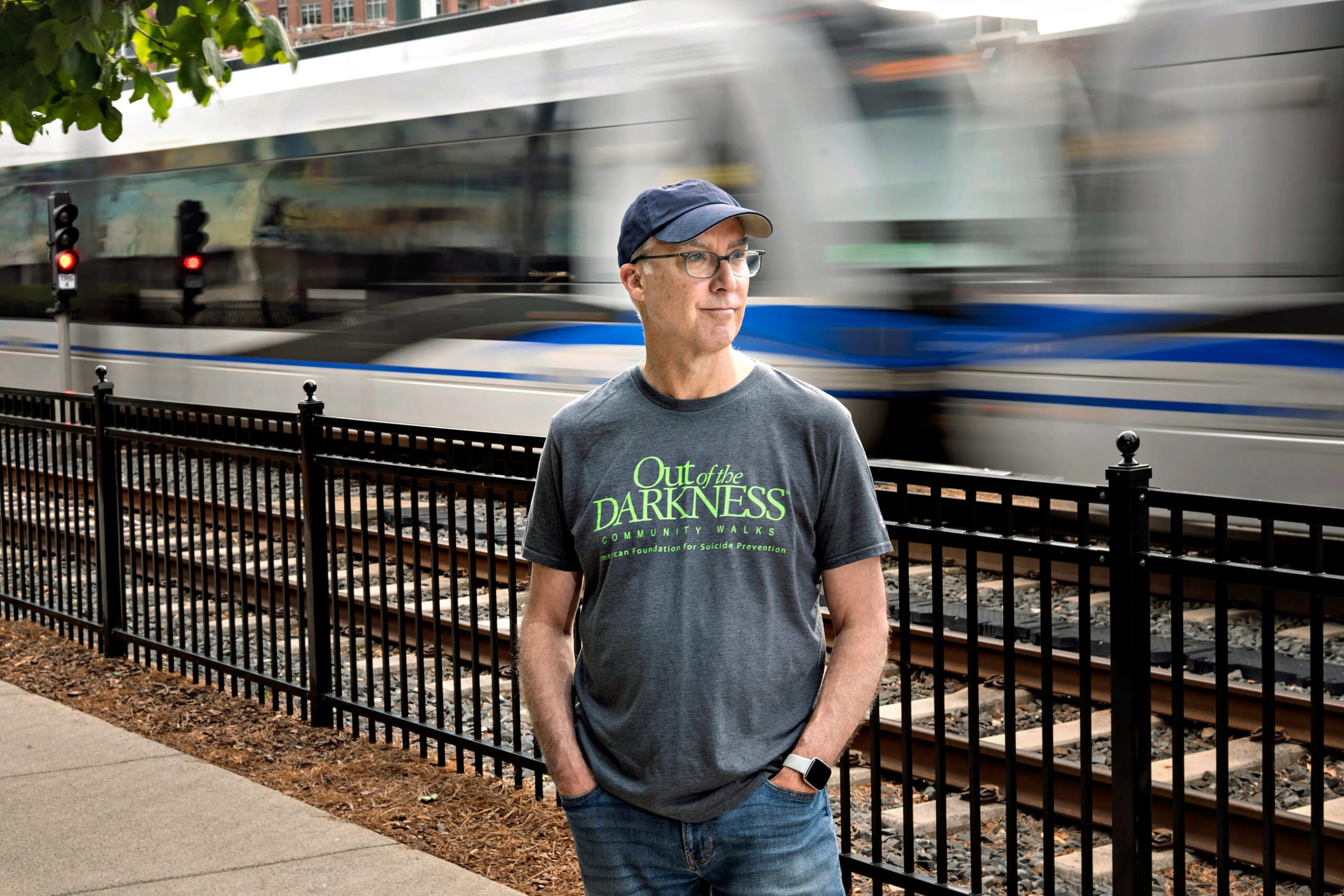
Nearly every Tuesday for a decade, Steve Siple attended a bar trivia night with friends in Birmingham, Alabama. After moving to North Carolina, he developed a new ritual — joining other Charlotte locals on Saturdays to pick up trash along the city’s light rail.
These are more than fun outings to Siple. They help keep him alive.
Siple has battled suicidal thoughts in the past. He lost his father to suicide, and one of his sons has struggled with thoughts of hurting himself.
That’s made Siple vigilant about protecting himself and his family. In addition to seeing a counselor regularly and speaking openly about mental health, he prioritizes social connection.
“Loneliness was, over my lifetime, one of the greatest risk factors” for suicide, said Siple, a former board chair for the American Foundation for Suicide Prevention.
To some, this concept may seem obvious. Yet in the overall approach to suicide prevention, it’s often overlooked. Treatment of a serious mental illness that can lead to suicide, such as major depressive disorder, often centers on medication and talk therapy with little or no consideration of factors such as social isolation or financial duress. Now, there’s a growing movement to address loneliness not just through personal choices but also through public policy.
The research is clear: Among the various complex issues that contribute to suicide, loneliness is a big one. It’s a particularly strong predictor for older adults, who have the highest rates of suicide, and for youths, for whom suicide is the second-leading cause of death.
Humans are social animals. When we feel cut off from one another, our stress levels increase, our immune systems are disrupted, and ultimately we’re likely to die earlier (by suicide or of other causes). An oft-cited study concluded that being socially disconnected is as harmful to one’s health as smoking up to 15 cigarettes a day.
And it’s getting worse.
Mental health researchers and clinicians say a variety of factors are fueling increased rates of loneliness in America, including the rapid growth of technology, such as smartphones and artificial intelligence; increased political polarization; the shift to remote work since the covid pandemic; and decreased participation in religious institutions.
With suicide rates remaining stubbornly high — often ranking among the top 10 causes of death in America — some advocates and people who have lost loved ones to suicide say increasing pathways to social connection could be a new frontier.
In this ongoing series, KFF Health News is examining new approaches to suicide prevention that shift the focus from stopping harm in moments of crisis to efforts that give people reasons to live well before they make fateful choices.
“If we want to reduce suicide rates in our country, which is absolutely essential, then a key part of that has to be fostering social connection,” said Vivek Murthy, who served as surgeon general under Presidents Barack Obama and Joe Biden. “We have more than enough data to support this as being an important area of focus.”
In 2023, Murthy released the first U.S. Surgeon General’s Advisory on loneliness as a public health issue, with more than 300 supporting citations. He’s also written a book on the topic and is touring the country discussing the value of social connection.
“To help someone else feel less alone, to help them feel seen and understood and valued,” he told KFF Health News, “that can be one of the most powerful interventions that we make.”
Steve Siple holds a photo of his father and his son. Siple’s father died by suicide in 2001. (A.M. Stewart for KFF Health News)
A Role for Elected Officials
Curing loneliness may seem like the responsibility of families and neighbors, people making one-to-one connections. But Murthy says elected officials have work to do, too.
They can use their bully pulpits to turn this into a mainstream issue, he said. They can create microgrants to support grassroots ideas from community entrepreneurs and invest in “social infrastructure,” he added.
That term refers to things in the community that support the development of social connection, from physical spaces, such as libraries and parks, to policies and programs, such as building public transportation and fostering volunteer groups.
“These all matter and impact whether people gather,” Murthy said.
Email Sign-Up
However, investing in public institutions and infrastructure is a costly endeavor that can seem unreasonable when local officials are struggling to balance budgets without increasing tax burdens.
That’s where creativity can kick in.
A health system and a museum in Charlotte have teamed up to provide “prescriptions” for people to attend art classes or live performances together. In Tennessee, the city of Chattanooga is funding community ideas to increase connection and time in nature, including benches where people can speak with volunteer listeners. And across the country, men’s sheds have popped up as places where men can work on projects side by side and discuss their mental health.
Meal Deliveries and Valentines
Marcie O’Neal knew she wouldn’t have much money at her disposal. She was hired in 2024 to lead suicide prevention efforts in the rural Pennyrile region of western Kentucky after local leaders saw a rise in suicides among the elderly. Her grant was about $280,000 — less than $3 per person in the region.
Denise Porter holds one of the cards that high school students send to older people in western Kentucky’s Pennyrile region as part of local suicide prevention efforts. Program leaders say the goal is to help these residents feel less isolated and empower youths to feel they can make a difference in their communities. (Marcie O’Neal)
But she knew the nine-county area had other strengths, such as dedicated meal delivery programs and high school clubs.
Drivers who drop off prepared meals to homebound residents “can be the only person that an older adult sees in the week,” O’Neal said.
The state had already been training some of those drivers to recognize warning signs of suicide among older people and alert county agencies to follow up with them. O’Neal thought there could be another component.
She reached out to high school Beta clubs, which focus on fostering leadership skills and volunteerism, across the nine counties and asked them to write cards that could be distributed to older residents along with meals. The response was swift, O’Neal said.
About 1,200 cards were delivered last May. They repeated the gesture in February for Valentine’s Day and again this May.
O’Neal said one of the older residents told her, “I don’t remember the last time I got a Valentine’s card.”
The students also enjoyed feeling as if they made a difference, O’Neal said. She’s helping one school set up an ongoing pen pal program with a nearby retirement community.
Locals affectionately call O’Neal “the suicide lady” — a term she considers “a badge of honor.”
Suicide prevention “doesn’t have to be sweeping huge things,” she said. “It’s a little thing you can do that can kind of snowball into more things.”
‘The Secret Sauce’
Siple, who has prioritized social connection through the trivia nights and volunteer clean-ups, felt most alone when he transitioned from a job at a commercial bank to working at home.
He spent most of his day analyzing Excel sheets, drafting grant proposals, and compiling recommendations for clients. The work felt important, but it was isolating, Siple said.
“If my wife or kids were around during the evening, I was safe,” he said. Holding meetings at coffee shops helped, too.
But when it was just him at his desk, “that’s where I got the darkest lonely feelings,” he said, including thoughts of suicide.
Breaking out of that required seeking new connections.
Siple said church was a great anchor for him and his wife — not just on Sundays but throughout the week at Bible studies and potlucks. They also go to see a variety of live music, including bluegrass and alternative rock.
“Being with folks that are into the same type of music that we’re into for a concert feels like connection,” he said.
“Loneliness was, over my lifetime, one of the greatest risk factors” for suicide, says Siple, a former board chair for the American Foundation for Suicide Prevention. (A.M. Stewart for KFF Health News)
Research suggests sports can play a similar role in some instances. At least two studies have found major sporting events are associated with lower suicide rates. The authors posit it’s because people coming together to support their team or to enjoy the event creates a sense of belonging, which is protective.
That concept resonates with Sarah Brummett, who has worked on suicide prevention efforts at the state and national level and helps run Sources of Strength, an upstream prevention program. Fostering that sense of belonging has played a central role in each of those initiatives, she said.
“We can’t eliminate hard stuff in our lives,” said Brummett, who lost five friends to suicide, starting in middle school.
“Belonging is really the secret sauce,” she said, “for how we, as humans, can navigate really hard things.”
