

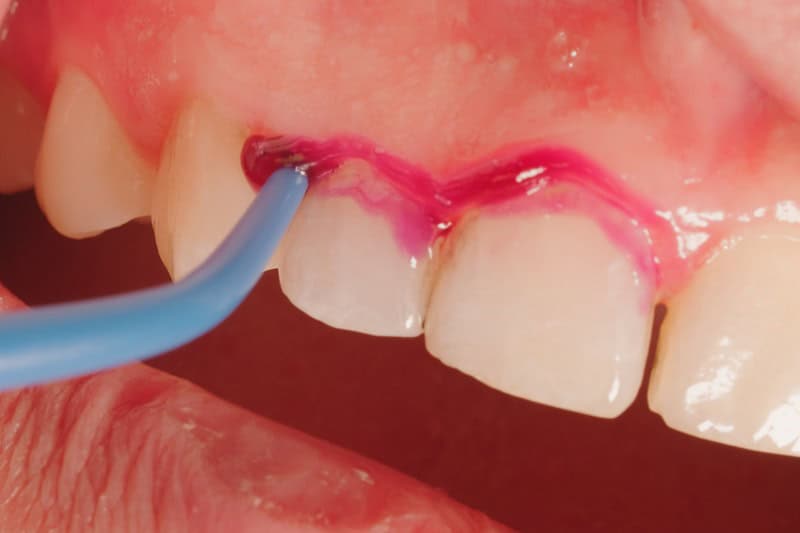
A moisture-removing approach targets biofilm and diseased tissue, providing dental professionals with an additional tool for periodontal therapy.
Periodontal disease remains a significant oral health concern in the United States, affecting approximately 47% of adults over the age of 30 at some level. As clinicians continue to seek effective approaches to periodontal treatment, advances in technology are creating additional options for managing biofilm and diseased tissue.
One approach gaining attention in dentistry is desiccation technology, a nonsurgical adjunct designed to target biofilm and necrotic debris while supporting mechanical periodontal treatment.
Desiccation technology works by using a liquid or gel medicament to remove moisture from its surroundings, including biofilm, infected microbial material, and necrotic tissue. YOUNG® PerioDT™ uses sulfonated phenolics to draw water electrostatically from pathogenic biofilm, denaturing its matrix and facilitating physical removal.1,2
Following application, the desiccant is thoroughly rinsed away. The recommended application time is 10 to 30 seconds, according to the manufacturer’s instructions.1
By affecting biofilm at the molecular level, desiccation technology alters the structure that allows biofilm to adhere to tooth surfaces. Once the underlying structure has been desiccated, the biofilm and smear layer become easier to remove. A 2023 narrative review also highlighted the potential of sulfonated phenolics to reduce bacterial load and inflammation when used alongside mechanical debridement.2
Clinical Evidence Supporting Desiccation Technology
Research has examined the use of desiccation technology as an adjunct to scaling and root planing (SRP), with findings suggesting potential improvements in periodontal treatment outcomes.
A 2018 randomized, controlled, split-mouth clinical trial published in Clinical Oral Investigations compared SRP alone with SRP combined with a desiccant. Researchers found that the combination treatment resulted in greater reductions in clinical measurements, microbial levels, and inflammatory mediators compared with SRP alone. These improvements were observed for up to one year.3
A separate 2023 randomized controlled clinical trial investigated the adjunctive use of desiccant gel in patients with Stage III periodontitis. Both treatment groups demonstrated significant improvements in periodontal parameters. However, the group receiving desiccant gel alongside SRP showed significantly greater improvements in relative attachment level (RAL), probing pocket depth (PPD), bleeding on probing (BOP), and gingival index (GI) at follow-up intervals. No significant differences were found in gingival height (GH) or plaque index (PLI).4
Additional research has explored the technology’s application to dental implants. A 2025 in vitro study evaluated sulfonated phenolic desiccation technology on contaminated implant surfaces. Researchers reported that the approach was effective under challenging, high-organic conditions and observed no corrosion or damage to the implant surfaces following treatment. The findings suggest potential applications for adjunctive peri-implant debridement, although further clinical research is needed.5
Clinical Benefits of Desiccation Technology
Desiccation applications, such as YOUNG PerioDT from Young Innovations, offer several potential benefits for dental practices. These include:
- Nonsurgical treatment approach: Provides an additional option for periodontal biofilm management alongside mechanical debridement.
- Fast application: The desiccation effect begins immediately upon contact, with a recommended application time of 10 to 30 seconds.
- Targeted action: Draws moisture from pathogenic biofilm and necrotic tissue.
- Ease of use: Offers a straightforward application process using a liquid or gel delivery system.
- Improved biofilm removal: Helps denature the biofilm matrix and remove residual smear layer.
- Support for periodontal treatment: Clinical research has demonstrated improvements in several periodontal parameters when desiccants are used alongside SRP.
Another distinguishing feature of desiccation technology is that it is non-antibiotic. Rather than relying on systemic or locally delivered antibiotics, it provides an adjunctive approach to periodontal debridement.2
Safety Considerations
When used according to the manufacturer’s instructions, desiccation technology is designed for application to dental surfaces. PerioDT is intended for adjunctive chemical debridement of tooth, implant, and prosthetic surfaces during mechanical scaling, root planing, and oral cleaning procedures.1
The manufacturer identifies dentin, enamel, cementum, titanium, prosthetics, and other dental metals as appropriate surfaces for application. The product can be used before and after mechanical debridement, including surgical/open-flap and nonsurgical procedures, particularly when implant surfaces are inaccessible to mechanical instruments or heavy biofilm persists.1
The manufacturer recommends applying PerioDT for 10 to 30 seconds and thoroughly rinsing the treated surface with high-volume evacuation. Clinicians should follow the product’s instructions for use and avoid exceeding the recommended application time.1
Safety and effectiveness have not been established in pregnant women or children younger than 18.1
Clinicians should review the manufacturer’s complete instructions for use and safety information before incorporating the product into their treatment protocols.
An Additional Tool for Periodontal Therapy
As periodontal treatment continues to evolve, desiccation technology offers dental professionals another approach to managing biofilm and diseased tissue. Clinical research has demonstrated potential benefits when desiccants are used alongside mechanical debridement, including improvements in periodontal measurements and reductions in microbial and inflammatory markers.
Products such as YOUNG PerioDT give clinicians an additional option to consider when developing periodontal and peri-implant treatment strategies for their patients.
Click here for more information about PerioDT and its application.
REFERENCES
- Young Innovations. YOUNG PerioDT: Desiccation Technology Product Information and Clinical Overview.Manufacturer product literature. Rev. 02/2026.
- Micu IC, Muntean A, Roman A, et al. A local desiccant antimicrobial agent as an alternative to adjunctive antibiotics in the treatment of periodontitis: A narrative review. Antibiotics (Basel). 2023;12(3):456. doi:10.3390/antibiotics12030456.
- Isola G, Matarese G, Williams RC, et al. The effects of a desiccant agent in the treatment of chronic periodontitis: A randomized, controlled clinical trial. Clin Oral Investig. 2018;22(2):791-800. doi:10.1007/s00784-017-2154-7.
- Khalil B, Abou Sulaiman A, Al Hajjar B. The effects of adjunctive use of a desiccant agent in the treatment of Stage III periodontitis (randomized controlled clinical trial). Saudi Dent J. 2023;35(2):172-177. doi:10.1016/j.sdentj.2023.01.001.
- De Nale M, Corte LD, Bruschi E, et al. An in vitro study exploring a new method for managing peri-implant disease using the ten second technique. Sci Rep. 2025;15:24870. doi:10.1038/s41598-025-08946-8.




Leave a Reply