

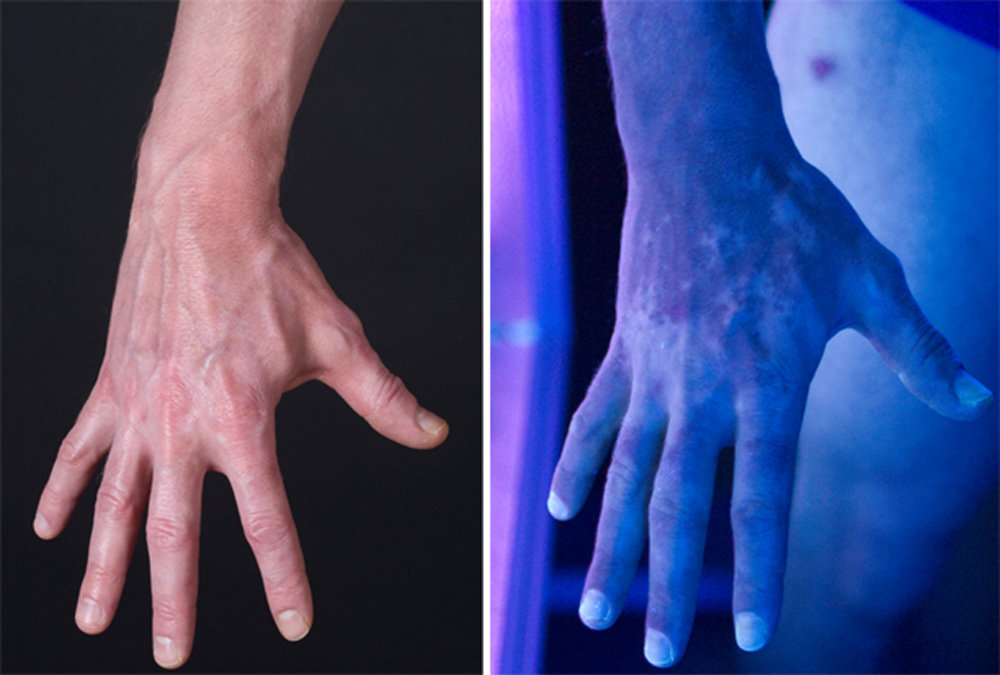
Skin tests, including a use test, a patch test, a prick (puncture) test, and an intradermal test, may be done if a doctor suspects an allergic reaction is the cause of a rash.
In the use test, a suspected reaction-causing substance, known as an allergen, is applied far from the original area where the rash is (usually on the forearm). This test is useful when perfumes, shampoos, or other substances found in the home may be the cause of a rash. If redness, blistering, itching, or sometimes pain occurs in (and sometimes around) the area where the allergen is applied, the test is considered positive.
In the patch test, many small samples of common and suspected allergens are contained in patches that doctors tape to the skin (typically on the upper back). The patches are left on for 48 hours and then removed. Doctors evaluate the skin under the patches at removal and then again 72 or 96 hours later. It often takes the skin several days to produce a visible reaction. If an allergen produces a characteristic, usually itchy reaction, the person is probably allergic to it. In people who have light skin, the color of the reaction is usually red. In people who have dark skin, the color of the reaction may have less contrast with surrounding skin and thus be more subtle. Sometimes the allergens produce an irritating reaction that is not a true allergic reaction.
In the prick test, doctors place a drop of an allergen on the skin. Then, the drop is pricked with a needle to introduce a very tiny amount of the allergen into the skin. The skin is then observed for hives, which usually occur within 15 to 20 minutes. Redness (or other color changes) can help support a positive test. (See also Skin testing.)
MAURIZIO DE ANGELIS/SCIENCE PHOTO LIBRARY
In the intradermal test, tiny amounts of a diluted allergen are injected under the skin. Doctors then watch the area for the extent and firmness of swelling, which indicate an allergic reaction. Redness (or other color changes) can help support a positive test. (See also Skin testing.)
EDWIGE/SCIENCE PHOTO LIBRARY
Although rare, prick and intradermal tests can cause a severe allergic reaction, known as anaphylaxis, which can be life threatening. Therefore, these types of tests should be done only by a trained health care professional.




Leave a Reply