

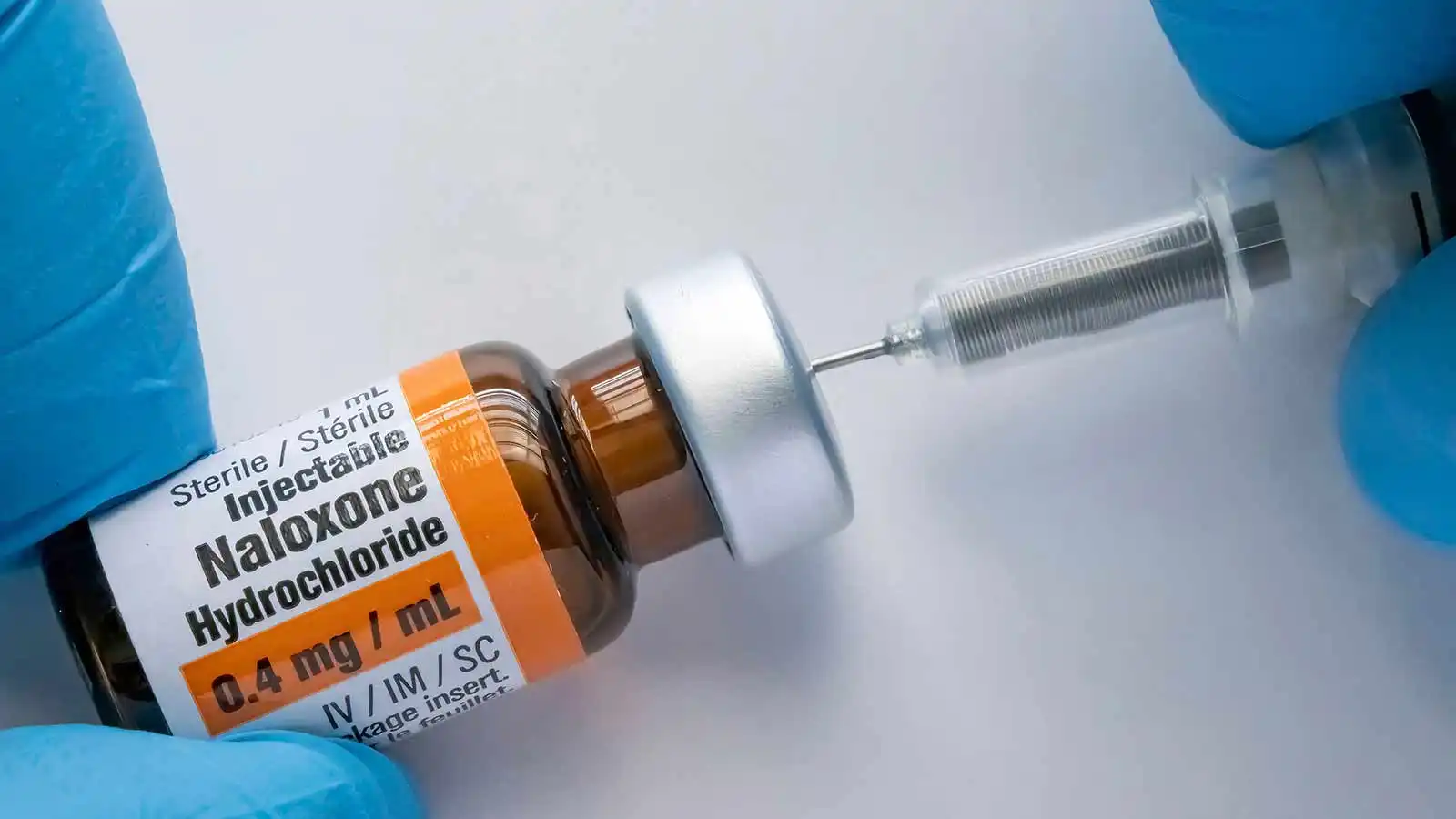
In my first year of college, I saw a man drifting out of consciousness at a city intersection. His breathing was slow, and his lips were blue. The New Haven winter nipped relentlessly at exposed skin, and part of me suspected hypothermia. But after a sternal rub failed to wake him, I administered the naloxone (Narcan) I had made a habit of carrying and used a CPR mask to deliver rescue breaths. Within minutes, he regained consciousness. As I reached for my phone to call a friend to bring water, the man said, “Please don’t call the police. I’d love somebody to just sit with me.”
Darman* was unhoused and an Afghanistan veteran living with post traumatic stress disorder (PTSD). There are parts of his story that I may never fully grasp, even now as a medical student — or even after a decade as a physician. What I did understand was the importance of having someone to lean on and seeing the full human beyond his emergency.
This year, my classmates in student government and I worked with faculty at Stanford University School of Medicine to make opioid overdose training a required part of the curriculum for every incoming class of medical and physician assistant students. Substance use curriculum in medical schools has historically focused on alcohol and tobacco, and a 2024 systematic review of 192 institutions found that only 9.4% had opioid use disorder training programs.
We also recruited an instructor with lived experience of substance use to lead the course. This is part of a larger point my peers and I hope to make: every medical trainee should graduate prepared to reverse an overdose and approach substance use without judgment.
The opioid epidemic was declared a public health emergency in October 2017, and has since claimed half a million American lives. Its earlier waves were driven by prescription opioids and then heroin; a third wave began around 2013, with substantial increases in deaths involving synthetic opioids, particularly illicitly manufactured fentanyl and its analogs. From 1999 through 2023, approximately 806,000 people died from opioid overdoses. Deaths have declined in recent years, with supply-side changes and community prevention efforts among likely contributors.
However, now is not the time to take our feet off the pedals. The opioid crisis is ongoing, and certain regions of the U.S. continue to be impacted disproportionately. Alongside upstream governmental policies and campaigns, medical schools therefore have a responsibility to continue the grassroots work of educating the next generation of clinicians. Institutions should work alongside students to integrate overdose-response training throughout the curriculum, ensuring that this education remains a sustained commitment rather than relying on individual student initiatives to carry it forward.
However, simply distributing harm reduction supplies, such as naloxone, is not enough. When the conversation stops at naloxone, we leave out education on what to do while the medication takes effect and how to care for the person when they regain consciousness. Comprehensive overdose education must address both. Opioids depress the central nervous system, slowing or stopping breathing and depriving vital organs of oxygen. Naloxone blocks opioids’ effects at their receptors and can restore breathing within several minutes. In the meantime, responders need to know how to support breathing to help prevent brain injury.
At our training, students practiced on CPR manikins: opening the airway by gently tilting the head back and lifting the chin, creating a secure seal with a CPR mask to reduce mouth-to-mouth contact, performing breaths, and monitoring the chest. Current American Heart Association guidance recommends one rescue breath every 6 seconds for an adult who has a pulse but is not breathing normally; if a pulse cannot be confirmed, CPR is needed. Students should also learn to stay with the person until emergency help arrives. Naloxone can precipitate severe withdrawal, and the effects of some opioids such as fentanyl can outlive the medication, making additional doses necessary.
Following their training at Stanford Medicine, every student now receives a free naloxone kit and a CPR breathing mask. We also recently worked with a campus center to install a harm reduction dispenser at the medical school. Successfully responding to an overdose depends in part on having these supplies close and accessible.
As students, we become part of the community where we go to school. We drink coffee in its neighborhoods, walk its streets, shop in its stores, read on its park benches. For a few years, we make a life there. The people who share this community with us become our neighbors, including the ones whose lives rarely intersect with ours inside the university. Preparing to care for them is part of belonging to a place.
That night, I stayed with Darman in a park while he recovered before asking permission to bring him to Yale-New Haven Hospital. Medical training, I learned, does not make us immune to homelessness, addiction, illness, or loss. He and I, you and me, we are bound by humanity and separated by circumstance. Darman and I both liked hot coffee and video games. He was a father; I hoped to become one someday. We both tried to speak to our mothers as often as we could — I over the phone, he in prayer.
Medical training will teach us to move quickly, to make decisions under pressure, to find the next thing that needs doing. I hope we also learn to recognize when someone needs us as a shoulder. Every medical school should prepare its students for that responsibility, and we can start by supporting one of America’s most vulnerable populations: victims of the opioid epidemic.
Looking back on my 4 years at Yale, I think of that night with Darman as the first time I felt like a true New Havener. For a little while, in the winter cold, we had each other. Today, as a medical student 3,000 miles away in California, in a place I am still learning to call home, that moment reminds me time and again that it is love — the action — not necessarily love, the loud, or love, the promised, that makes this life worth living and trying for.
*Patient’s name has been changed for privacy.




Leave a Reply