


Meichen Wang, Ph.D., has always appreciated good food. From her childhood in China to her academic journey through Texas and now life in Massachusetts, she has enjoyed trying different cuisines and exploring new restaurants. But as her scientific training deepened, she came to a troubling realization. The very foods people enjoy can also be a hidden source of harmful environmental contaminants, including PFAS, microplastics, polychlorinated biphenyls (PCBs), and pesticides.
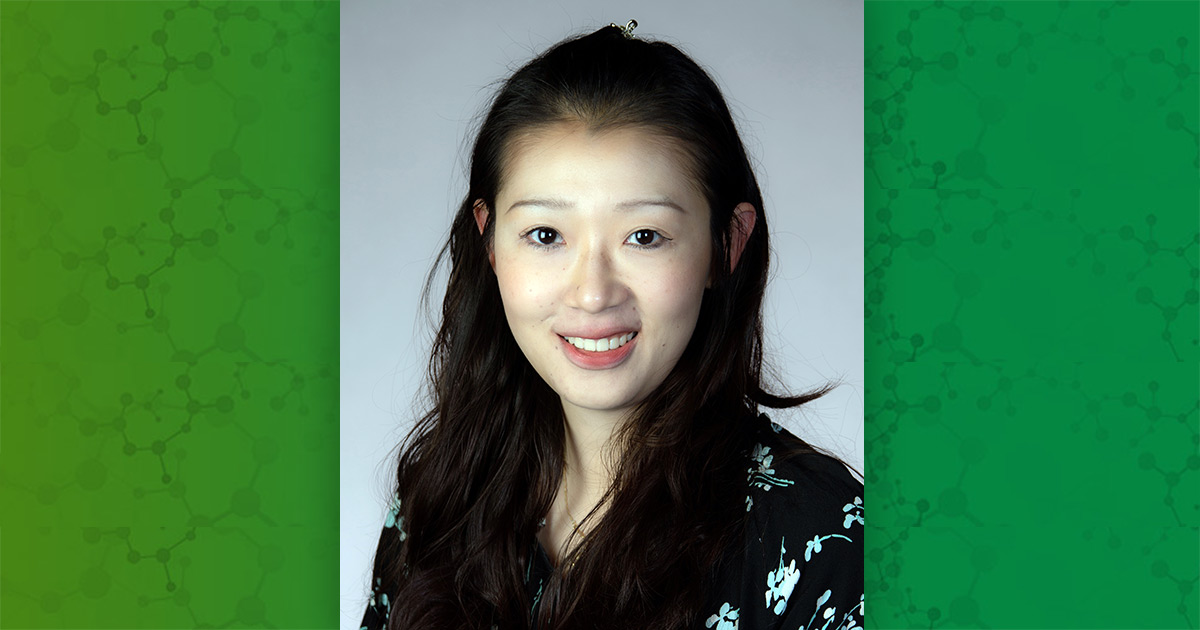
Wang is an assistant professor of environmental health sciences at the University of Massachusetts Amherst. (Photo courtesy of Meichen Wang)
“It is certainly important to identify the toxic effects of these chemicals,” Wang said. “But I became more interested in a different question — how can we protect people from this unintentional dietary exposure?”
With funding from NIEHS, Wang is answering that question in a groundbreaking way: developing edible, clay-based sorbents that trap chemicals before they enter the bloodstream.
The sorbents can be added to food or water and consumed orally. The materials work like a sponge in the digestive tract. They bind to and suck up toxic chemicals so they are not absorbed by the body, but instead expelled through stool.
“There is a critical need for mitigation, especially during critical windows of exposure, such as pregnancy and lactation,” said Wang. “We also need to protect first responders and people affected by natural disasters, which can churn up complex mixtures of hazardous chemicals that can contaminate food and water supplies.”
Finding a community
Wang studied pharmaceutical engineering at the Beijing University of Chemical Technology before deciding to pursue graduate studies in toxicology at Texas A&M University. It was there that she joined the team of University Distinguished Professor Tim Phillips, Ph.D., to explore ways to counteract human exposure to environmental toxins during disasters.
Wang and her team received a patent for two of the sorbent materials they created to work against environmental chemicals in the body. (Photo courtesy of Meichen Wang)
Together, they created more than 20 clay-based sorbent materials to work against a wide range of environmental chemicals. The team’s goal is for these sorbents to protect people most at risk for exposure to environmental contaminants, including first responders and survivors of natural disasters, such as hurricanes, floods, wildfires, and droughts.
As a former trainee at the NIEHS-funded Texas A&M University Superfund Research Program (SRP) Center, she collaborated with experts in computational modeling, molecular biology, community engagement, and data analysis. For younger investigators, the center offered career development training devoted to skills like CV preparation, networking, and building a LinkedIn profile.
“The Superfund Center is really a unique platform that brings a group of people from different backgrounds together to provide their expertise and work together toward a common interest,” said Wang.
Finding her own path
After earning her doctorate, Wang stayed on for her postdoc at Texas A&M, eventually receiving an NIH Pathway to Independence Award in 2023. The award provided support for her to continue developing new edible therapies as an independent researcher, with a focus on PFAS — ubiquitous compounds that persist in the environment and accumulate in the human body. Found in many industrial and consumer products, PFAS have been linked to a variety of health issues, including thyroid dysfunction, liver disease, reproductive and developmental problems, and cancer.
In animal studies, funded by NIEHS, Wang found that PFAS exposure not only affected the mother’s reproductive system, but also disrupted the development of offspring who were consuming milk from their PFAS-exposed mother. Both generations showed signs of systematic inflammation, liver damage, and disrupted blood biochemistry and vitamin levels.
In a follow-up animal study, Wang found that administering the clay-based sorbents protected mothers and their offspring from those adverse health effects.
“The sorbent material could be a promising intervention approach to reduce PFAS exposure and toxicity,” she said. “Eventually, I hope to test the sorbent intervention in human populations for their efficacy and safe dosage, and to translate them for temporary use.”
“This is not something I would recommend for everyday use,” Wang added. “But it could offer a critical layer of protection during critical windows of exposure and disasters.”
Citation:
Wang M, Oladele JO, Rivenbark KJ, Phillips TD. 2025. Mitigation of PFAS toxicity through sorbent treatment in Sprague-Dawley rats during prenatal and postnatal exposure. Toxicology 515:154156.
(Lindsay Key is a senior communications specialist at MDB, Inc., a contractor for the NIEHS Division of Extramural Research and Training.)
