

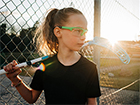
Engaging in sports and physical activities is among the most effective ways to maintain physical health, offering benefits ranging from enhanced cardiovascular endurance to building and preserving muscle mass. Notably, optical wellness, which at times may come as an afterthought during physical activity, also requires due attention. Safeguarding vision during athletic events is essential not only for avoiding immediate ocular injuries, but also for ensuring athletes can maintain an active and healthy lifestyle for many years.
September is designated as Sports Eye Safety Month, serving as a timely reminder for both parents of young athletes and adults to take proactive measures to safeguard their vision and protect their eyes from injury. Before stepping onto the court or field—whether for traditional sports such as baseball, soccer, and basketball, or trending activities like pickleball—selecting the appropriate protective eyewear to safeguard your sight ought to be a primary focus.
Prevent Blindness, a leading patient advocacy organization committed to preserving vision, reported that over 44,000 sports-related eye injuries received medical treatment across the U.S. in 2025. Basketball resulted in the highest incidence of eye injuries among individuals aged 15 and older, according to the data. Meanwhile, pool and water sports, including swimming, accounted for the highest number of eye injuries in children aged 14 and under. Furthermore, eye injuries associated with pickleball—currently among the fastest-growing sports across the U.S.—were on the rise.
Stephanie Marioneaux, MD.
The good news is that an estimated 90 percent of all sports-related eye injuries can be avoided with proper protective eyewear, according to the American Academy of Ophthalmology.
Addressing common concerns about protective eyewear, Stephanie Marioneaux, MD—a board member for Prevent Blindness and president-elect of the American Academy of Ophthalmology (AAO)—told VMAIL Weekend that users often object to its bulky fit and fear it will hinder their vision. To overcome these hurdles, she emphasized the importance of athletes accepting eye protection as an essential “part of the uniform” from day one.
“If you start as a youth—or at whatever age you begin playing a sport—with your protective eyewear, you will begin to learn the sport with the eyewear,” she said. “This means if you need to turn your head a different way or do something a little differently because of the protective eyewear, you begin to do it automatically and intuitively, so it doesn’t seem like it’s something awkward or some type of hindrance.”
The Role of ECPs
Both optometrists and ophthalmologists play a vital role in sports vision care. Both professions can educate athletes about eye injury protection, recommend sport-specific protective eyewear, identify individuals at increased risk, and evaluate eye injuries when they occur, according to Jarrod Davies, OD, FOVDR, FNAP, Utah Vision Development Center and current president of the International Sports Vision Association (ISVA).
Jarrod Davies, OD, FOVDR, FNAP.
“Optometrists have a significant role in primary eyecare, including initial assessment, diagnosis and treatment of many ocular injuries, monitoring recovery and addressing the visual function needed for safe return to sport,” Dr. Davies noted. “Ophthalmologists provide medical and surgical management of more severe injuries and effective communication between the two professions helps ensure that athletes receive timely care and can return to playing sports as safely as possible.”
Dr. Davies believes athletes should ask their eye doctor about the visual demands of their particular sport, as there may be opportunities with visual correction or training to enhance athletic performance. Safety considerations should be taken into account and patients should discuss the risk of eye injury for specific activities with their doctors.
“Eyecare professionals can help guide patients to the appropriate visual correction to ensure optimal performance and safety while competing. They may also provide recommendations or referrals for sports-specific vision performance training,” he stated.
Sports Eye Safety Awareness
Amanda Nanasy, OD.
While building these individual routines early on is vital for athletes, broadening eye safety awareness throughout larger communities demands active involvement at the local level. Amanda Nanasy, OD, a team doctor for organizations including the NFL’s Miami Dolphins and Inter Miami CF, and past chair of the American Optometric Association’s Sports and Performance Vision Committee, noted that sports are a shared interest across many communities.
For optometrists, she said, connecting vision to sports performance and safety can provide another relevant way to engage patients and families and reinforce the importance of eyecare. This can be especially meaningful in underserved communities including within Hispanic and Latino populations, where disparities in eyecare utilization persist. One national analysis found that Hispanic adults were the least likely racial or ethnic group to use eyecare services, which makes playing sports another practical entry point for conversations about vision, eye disease prevention and regular eye examinations.
Dr. Nanasy stressed the critical need for sports eye safety, pointing out that although standard protective eyewear can prevent most sports-related injuries, usage and awareness stay surprisingly low, especially among recreational participants and young athletes.
“Sports can provide optometrists with another way to make conversations about vision relevant and relatable. By connecting performance and safety with broader eye health, we can help patients and families better understand the importance of comprehensive eyecare,” she said.
Education Is Key
Coaches and parents can serve as two of the most effective advocates in driving the initiative to make protective eyewear mandatory in youth sports. Some sports require more than just protective eyewear to protect the face and head. For example, helmet-mounted face guards, face shields, or face cages may also be recommended or required depending on the sport, age of the player, and league rules.
“It’s all about education and we can educate them by getting this information out in a manner in which they are able to see it, understand it, and hear it again,” said Dr. Marioneaux. “That’s the important thing, because many people don’t think about protective eyewear when they think of certain sports. They may think they don’t need it. So, anyone involved in sports should be educated about the importance of protective eyewear.”
To view the full fact sheet from Prevent Blindness, click here.
“A parent’s primary role is to ensure their child is evaluated by an eyecare professional and appropriately prepared visually for their sport. Regular eye examinations should be performed to ensure they can see clearly for the best sports performance,” Dr. Davies advised. “The parent should then choose the right protection based on the doctor’s recommendations and set the expectation that the protective lenses should be worn every time the child plays. If an injury does occur, make sure you seek help from an eyecare professional immediately.”
According to Dr. Davies, prevention and protection are the best methods to help reduce the risk of eye injury. “As eyecare professionals, we want everyone to be prepared for their sport and receive vision care that helps them perform to the best of their ability.”




Leave a Reply