

Localized hyperpigmentation can be caused by
-
Skin injuries
-
Skin inflammation
-
Reactions to sunlight
-
Abnormal skin growths
Hyperpigmentation can develop after injuries such as cuts and burns or with inflammation caused by disorders such as acne and lupus.
Some people develop hyperpigmentation in areas of skin that have been exposed to sunlight. Some plants (including limes, celery, and parsley) contain compounds called furocoumarins that make some people’s skin more sensitive to the effects of ultraviolet light when they touch the skin. This reaction is called phytophotodermatitis (see Chemical photosensitivity).
Hyperpigmentation can also occur in melasma, freckles, lentigines, and café-au-lait spots (flat, brown spots), as well as in abnormal skin growths such as moles and melanoma.
People who have a disorder called acanthosis nigricans develop darkened and thickened skin in the underarms, on the nape of the neck, and in skinfolds. Acanthosis nigricans can be a symptom of diabetes or of polyendocrine metabolic ovarian syndrome (PCOS).
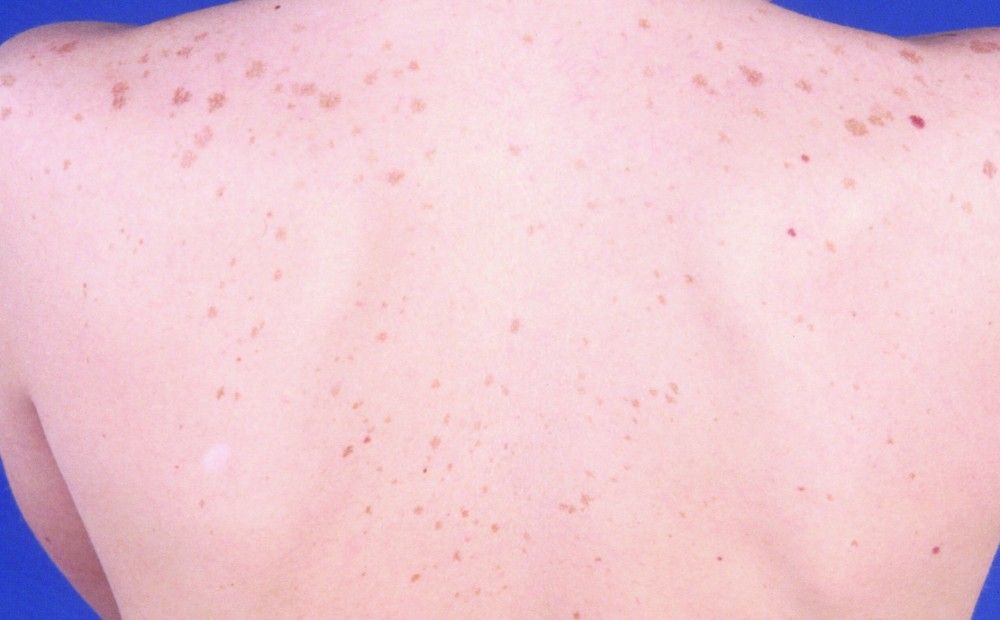
Lentigines are commonly called age spots or liver spots (but they are not related to liver problems). They are flat, tan to brown, oval spots on the skin. A single spot is called a lentigo. They are a type of localized hyperpigmentation.
There are 2 types of lentigines:
Solar lentigines are caused by sun exposure and are the most common type of lentigo. They occur most frequently on areas that are exposed to the sun, such as the face and back of the hands. They typically first appear during middle age and increase in number as people age. Lentigines are noncancerous (benign), but people who have them may be at higher risk of melanoma.
Nonsolar lentigines are not caused by sun exposure. Nonsolar lentigines sometimes occur in people with certain rare hereditary disorders, such as Peutz-Jeghers syndrome (characterized by many lentigines on the lips and polyps in the stomach and intestine), xeroderma pigmentosum, and multiple lentigines syndrome (LEOPARD syndrome).
If people do not have too many lentigines but are troubled by their appearance, doctors can remove them with freezing treatments (cryotherapy) or laser therapy. Bleaching agents such as hydroquinone are not effective.
© Springer Science+Business Media




Leave a Reply