

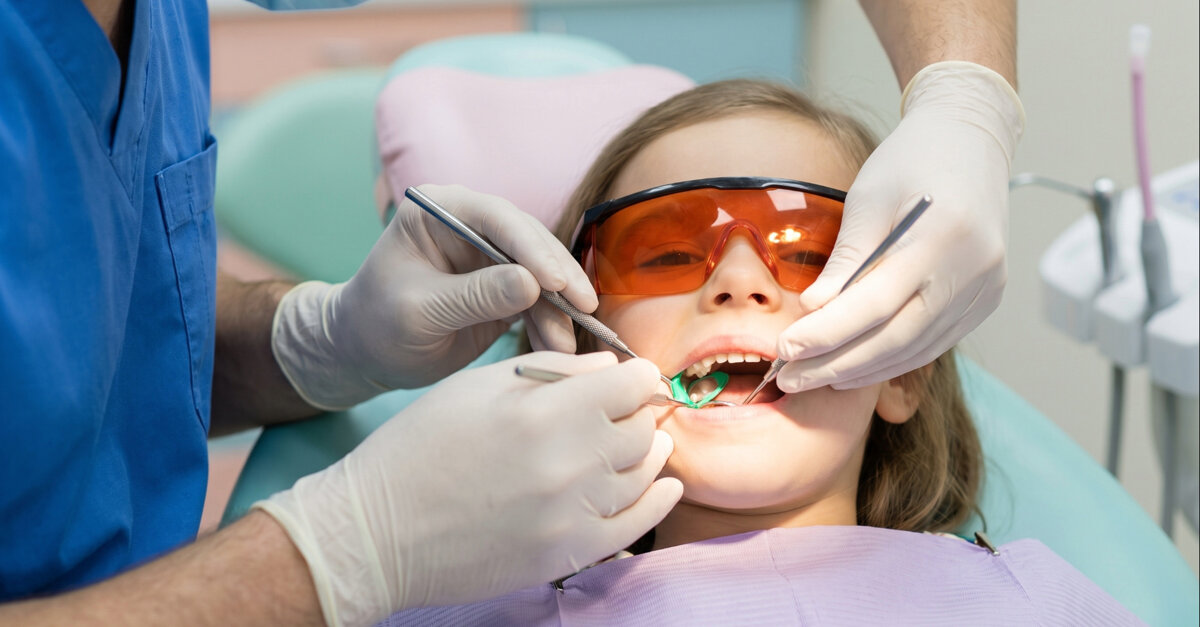
REGENSBURG, Germany: Although mineral trioxide aggregate is well established for pulpotomy in primary molars, its handling requirements and cost have prompted interest in other calcium silicate-based materials. A new randomised controlled split-mouth study compared ProRoot MTA with Biodentine and TotalFill BC RRM Putty for pulp cap after pulpotomy in primary molars. The researchers identified important differences in application time and treatment costs, potentially influencing material selection in paediatric dentistry.
The analysis involved 28 children aged 2–6 years, each requiring pulpotomy of three primary molars under general anaesthesia. In each child, one tooth was randomly assigned to each of the three materials for capping the remaining pulp. All treated teeth were subsequently restored with stainless-steel crowns.
The researchers assessed clinical survival at five and ten months, alongside application time, treatment costs and oral health-related quality of life. The principal finding was that all 84 teeth remained in place throughout the ten-month observation period, and there was no evidence of abscess, fistula or night-time pain. No statistically significant differences in short-term clinical outcomes were identified between the three materials. The study also reported modest improvements in the children’s oral health-related quality of life after treatment.
However, differences emerged when application time and financial considerations were examined. TotalFill BC RRM Putty demonstrated the shortest application time, taking far less time than ProRoot MTA or Biodentine, whereas Biodentine took the longest. Biodentine was the least expensive option, costing around 40% less per tooth than ProRoot MTA, the most expensive.
The researchers attributed TotalFill’s faster application to its ready-to-use form and putty-like consistency. Premixing may also reduce operator-related variability. Because of these practical advantages, the authors pointed out that this material could help reduce procedure time for young children being treated under general anaesthesia and may also be useful when treating less cooperative children in the dental clinic.
Similar findings have been reported in a larger randomised clinical trial, which found high clinical success rates at 12 months for ProRoot MTA and two other calcium silicate-based materials used in primary molar pulpotomy. The radiographic outcomes differed between materials however.
Overall, the findings of the present study do not identify a clear front-runner over ten months, but they do point to a practical trade-off: TotalFill has a shorter application time, whereas Biodentine offers the lowest cost. The authors thus concluded that material selection may reasonably consider practical handling characteristics and financial costs when short-term clinical outcomes are comparable.
The study, titled “Pulpotomy of deciduous molars with deep caries using three different hydraulic calcium silicate cements: A short-term pilot randomized controlled split-mouth study”, was published online on 17 October 2026 in Clinical Oral Investigations.
Topics:
Tags:
While existing bone repair materials can control bleeding, adhere to tissue or support bone regeneration, achieving all these functions in a material that …
WARDHA, India: BioFlx, a flexible resin crown, is promoted as an aesthetic alternative to zirconia crowns restoring primary molars because it requires less …
KAYSERI, Turkey: Although the Hall technique is highly effective in managing dentine caries in primary molars, silver fluoride offers the prospect of a …
BRESCIA, Italy: Although plaque disclosing has been shown to improve professional biofilm removal, its benefits in terms of effectiveness, treatment time …
CHICAGO, US: Foods and beverages are attracting increasing research interest for their potential effects on oral biofilms. In two randomised controlled …
SAN ANTONIO, US: The rising reported prevalence of autism is driving research into possible associations with early-life exposure to environmental …
Live webinar
Thu. 12 November 2026
8:00 pm EST (New York)
Dr. Pooja Ajitsankardas
Live webinar
Fri. 13 November 2026
8:00 am EST (New York)
Dr. Mathias Kühn
Live webinar
Mon. 16 November 2026
12:30 pm EST (New York)
Dr. Kristina Baumgarten
Live webinar
Tue. 17 November 2026
1:00 pm EST (New York)
Dr. Dennis Tarnow DDS
Live webinar
Wed. 18 November 2026
8:00 am EST (New York)
Dr. Alberto Monje DDS, MS, PhD
Live webinar
Wed. 18 November 2026
1:00 pm EST (New York)
Dr. Cyrus Alamouti
Live webinar
Wed. 18 November 2026
1:00 pm EST (New York)
Prof. Dr. Christian H. Splieth




Leave a Reply