

September is Dental Infection Control Awareness Month (DICAM), and this year’s theme, “Safety Starts with Every Step,” is a reminder that infection prevention isn’t one big initiative. Rather, it’s a series of small, consistent actions performed correctly every day, such as sterilizing instruments, changing barriers between patients, and disinfecting clinical surfaces. One task that’s often overlooked is testing dental unit waterlines.
That last step deserves more attention than it typically gets. One industry survey found that 10 percent of dental professionals reported doing nothing to treat their dental unit waterlines (DUWLs), while 24 percent reported not testing at all.1 That’s a significant gap, considering the CDC recommends that water used in nonsurgical dental procedures meets EPA drinking water standards of no more than 500 CFU/mL of heterotrophic bacteria.
The narrow tubing that feeds handpieces, air-water syringes, and ultrasonic scalers is an ideal environment for biofilm formation, especially when water sits stagnant overnight or over a weekend. Even thoroughly sterilized handpieces are only as safe as the water running through them. Left unchecked, biofilm-associated bacteria such as Legionella, Pseudomonas, and nontuberculous mycobacteria can build up to levels far exceeding safe drinking water thresholds. As several well-publicized legal cases have shown2, the consequences of contaminated waterlines can be severe for both patients and practices.
Testing is the First Step, and the One Most Often Skipped
Waterline treatment products, whether continuous antimicrobial systems or periodic shock treatments, only work if you know they’re working. That’s what makes testing the foundation of any waterline safety protocol. It’s the only way to confirm compliance, catch a failing system before it becomes a patient safety issue, and document that your practice is meeting CDC guidelines.
This is where FASTCheck15® fits into a DICAM-worthy routine. It’s an in-office water test strip designed to remove two of the biggest obstacles that keep practices from testing regularly: time and complexity.
FAST. FASTCheck15 delivers a pass/fail result in 15 minutes, right at the chairside or in the sterilization area, compared with the several days it can take to get results back from a traditional paddle test. With a paddle test, bacteria can continue multiplying in the waterline while you wait for results, meaning the water you’re using today could already differ from what you tested days ago. FASTCheck15 closes that gap, so you know your water is safe now, not several days from now.
SIMPLE. There’s no incubation period, no neutralizer to manage, and no counting red dots or matching ambiguous color gradients. The strip gives a clear, easy-to-read result: one line means pass, two lines means fail. For a busy operatory where dental assistants and hygienists are juggling multiple responsibilities between patients, this simplicity helps make routine testing sustainable.
AFFORDABLE. FASTCheck15 costs a fraction of other waterline testing methods, which removes one more barrier to routine testing. Cost and complexity are two of the most common reasons routine testing gets skipped, and FASTCheck15 addresses both.
How it Fits into a Complete Sterisil® SAFEWater Solutions Best Practice Protocol
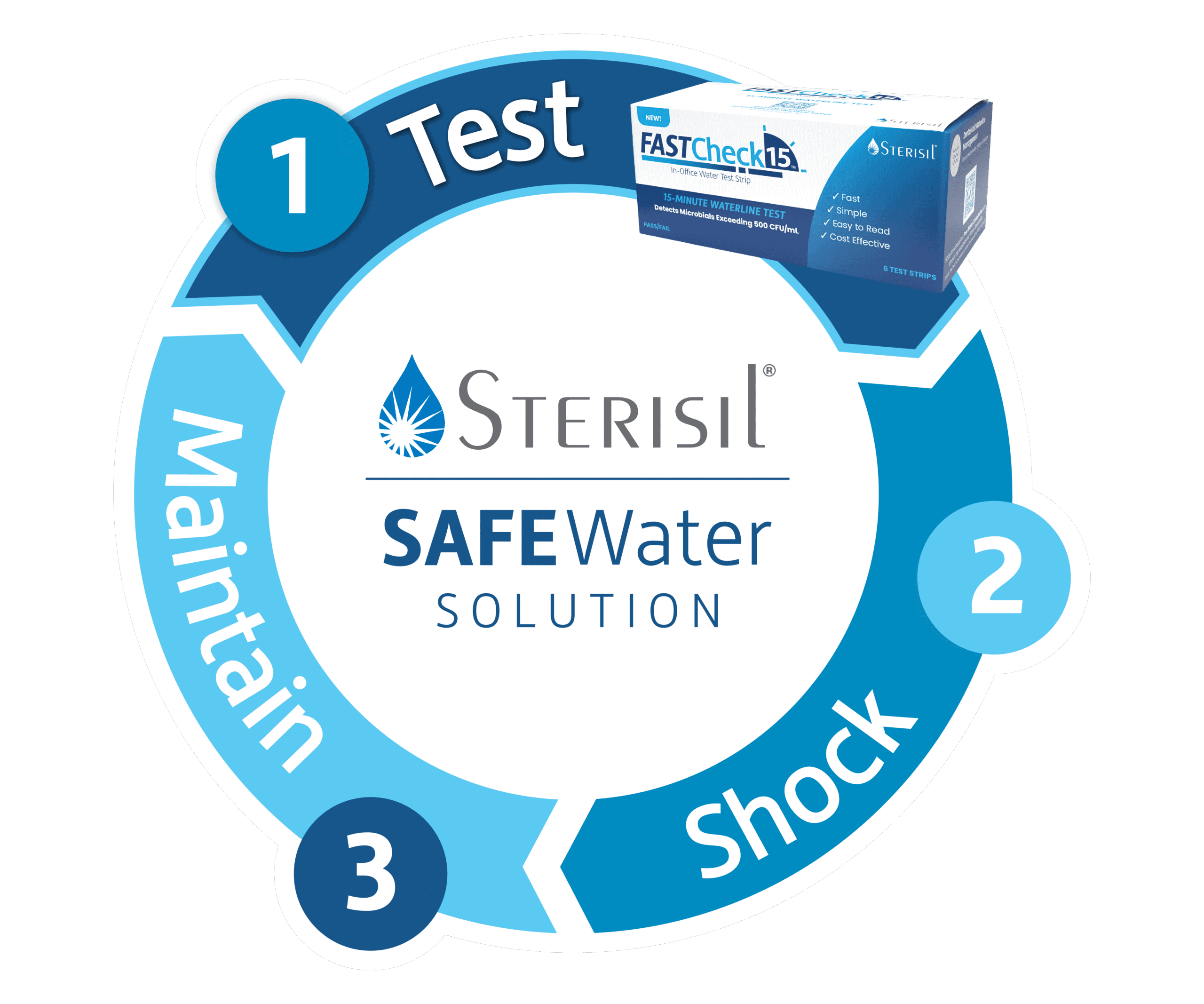
FASTCheck15 is the “Test” step in the Sterisil® SAFEWater Solution, a protocol built around Test, Shock, and Maintain:
- Test monthly with FASTCheck15 waterline test strips for a fast, in-office pass/fail result.
- Test quarterly with Sterisil R2A with FASTRead™ mail-in lab testing adding a gold standard layer of documentation. Used together, in-office and lab testing give practices both the speed to act quickly, and the third-party documentation regulators and risk managers want to see.
- Shock as needed with Citrisil™ Shock to address biofilm buildup after a failed test, during initial setup, or following a period of inactivity.
- Maintain daily with the Sterisil® Straw, which uses silver-ion technology to provide continuous antimicrobial treatment for up to 365 days without the need for daily manual dosing with tablets.
Make Testing Part of Your DICAM Routine
DICAM is a natural time to audit infection control habits that are easy to let slide, including waterline testing. It doesn’t require new equipment, new plumbing, or a complicated new workflow, just 15 minutes and a FASTCheck15 test strip.
This September, as your team reviews sterilization logs and barrier protocols, add one more line item: When did you last test your waterlines? If it’s been longer than a month, that’s the step where safety starts.
For more information on FASTCheck15 and the Sterisil SAFEWater Solution, visit solmetex.com.
_____________________________________________________________________________
References:
- DeStefano, Amelia W. Dental Unit Waterline Safety: What is (and isn’t) going well. RDH Magazine. Nov. 29, 2023.
- The Centers for Disease Control and Prevention (CDC): Outbreaks of Nontuberculous Mycobacteria Infections Highlight Importance of Maintaining and Monitoring Dental Waterlines. Oct. 31, 2022




Leave a Reply