

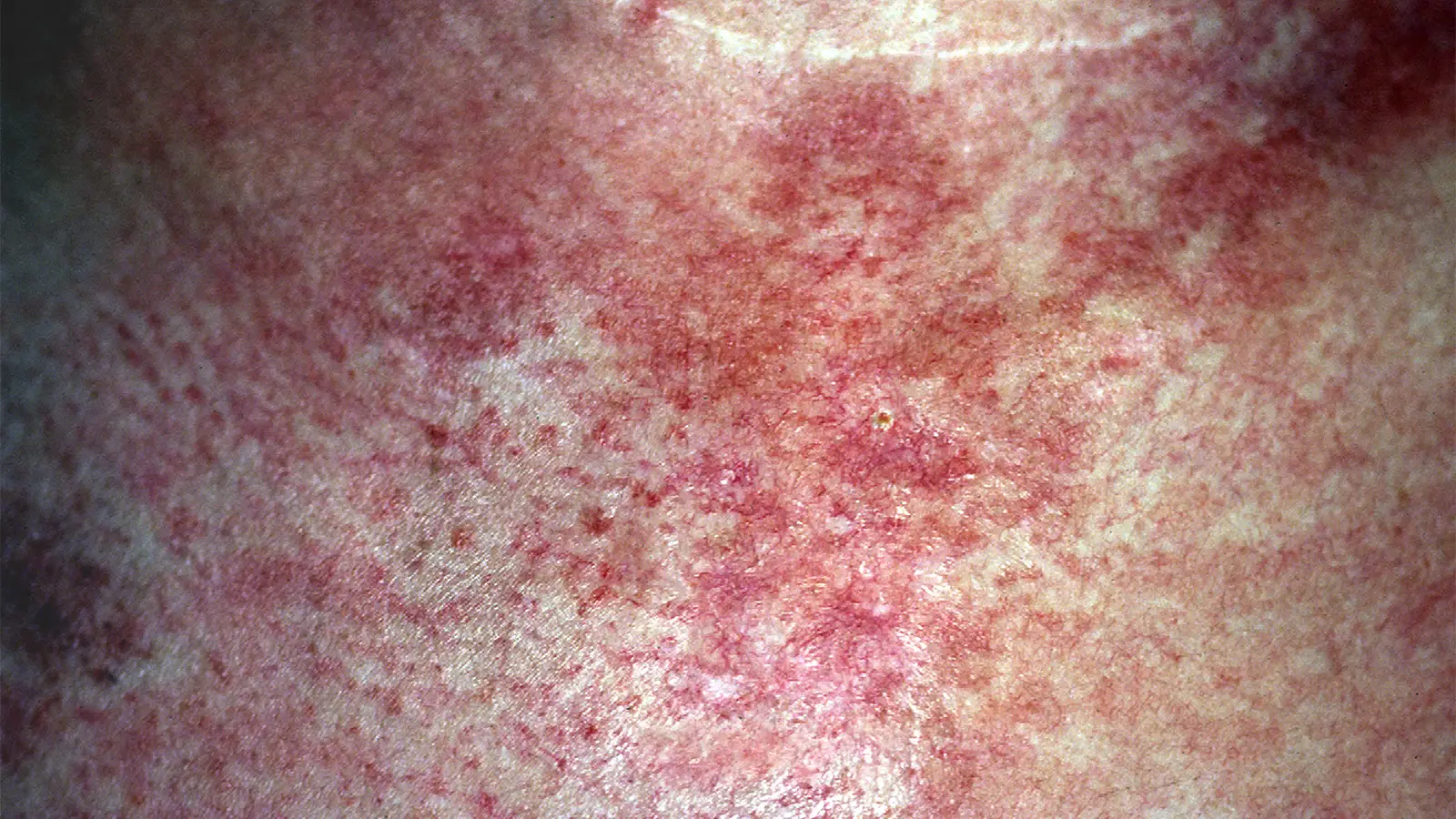
- Classic dermatomyositis (DM) had a significant association with postural orthostatic tachycardia syndrome (POTS), a retrospective study found.
- Patients with DM and concurrent POTS were all women and significantly younger than patients with DM alone.
- Cutaneous lupus erythematosus, with or without systemic lupus, did not have a significant association with POTS.
Autonomic tachycardia has a significantly stronger association with classic dermatomyositis (DM) than previously recognized and may warrant evaluation in symptomatic patients, authors of a retrospective review concluded.
Almost 90% of patients with DM and co-existing postural orthostatic tachycardia syndrome (POTS) had classic DM as compared with 56% of patients with DM and no history of POTS. Patients with concurrent DM and POTS were younger, and all of the patients were women. Myositis-specific autoantibodies (MSAs) and myositis-associated autoantibodies (MAAs) occurred in a similar proportion of patients with and without POTS.
Patients with classic DM had a significantly higher rate of concurrent POTS as compared with patients who had cutaneous lupus erythematosus (CLE), either alone or with systemic lupus erythematosus (SLE), reported Victoria P. Werth, MD, of the University of Pennsylvania in Philadelphia, and colleagues in a research letter in JAMA Dermatology.
“Although no MSA was associated with POTS, broad immune overactivation in DM may precede the development of functional autoantibodies targeting autonomic receptors previously reported in POTS,” the authors wrote. “Moreover, while both DM and CLE are characterized by type I interferon signatures, POTS may share inflammatory pathways specific to DM, such as interferon-beta-mediated responses. Enrichment of POTS in classic DM also suggests subtype differences within DM.”
“Overall, given the overlapping symptoms with DM, autonomic dysfunction may be underrecognized in DM populations, and evaluation of POTS in symptomatic patients should be considered,” they added.
POTS is an autonomic disorder characterized by an excessive increase in heart rate on standing in the absence of orthostatic hypotension. The condition affects 0.1% to 1% of the U.S. population, and women account for a majority of patients. The origin of POTS remains unclear, but accumulating evidence suggests an autoimmune component, Werth and colleagues noted.
Some POTS symptoms overlap with autoimmune conditions. As many as 20% of patients have a coexisting autoimmune disorder, 25% of whom test positive for antinuclear antibodies (ANAs). Additionally, autoantibodies specific for alpha- and beta-adrenergic receptors have been found in patients with POTS and implicated in vasoconstriction and tachycardia.
As many as 85% of patients with POTS have cutaneous symptoms, including Raynaud phenomenon and livedo reticularis. The association between POTS and DM has been underreported, the authors noted. To inform the issue, they performed a retrospective review of University of Pennsylvania DM and CLE databases to identify patients with POTS diagnoses from January 2007 to November 2025. Demographic, clinical, and laboratory data were extracted from records for every patient with DM.
Data analysis included 608 patients with DM, 18 of whom had concurrent POTS. Patients with concurrent DM and POTS had a median age of 36.3 versus 49.8 for patients without POTS (P<0.001). All 18 patients with the concurrent conditions were female versus 497 of 590 (84.2%) patients without POTS. POTS diagnosis occurred a median of 5.03 years after DM diagnosis.
Among 311 patients with CLE and concomitant SLE, two had POTS, and none of 318 patients with CLE only had POTS diagnoses. POTS prevalence in patients with classic DM was significantly higher as compared with the CLE-SLE and CLE-only cohorts (P=0.012 and P<0.001, respectively).
Classic DM accounted for significantly more patients with concurrent POTS than among patients with DM and no POTS (16 of 18 vs 313 of 590, P=0.003). Ten patients with POTS and 145 without POTS tested positive for ANAs (P=0.15). The prevalence of MSAs was 38.9% in patients with POTS and 34.9% in those without, and the MAA positivity rate was 21.4% and 19.5%, respectively.
The authors acknowledged several limitations to the study: its single-center design, the small cohort with DM and concurrent POTS, the retrospective nature of the analysis that precludes causal inference, and the variability of autoantibody testing methodology.
“Further studies are needed to clarify the autoimmune mechanisms linking DM and POTS,” they wrote.




Leave a Reply