

Four Baltimore teens were hanging out by the picnic tables in front of their high school waiting for their ride home after football practice. The four friends were talking and munching on Doritos that the coach had given each of them after practice. All of a sudden at least six Baltimore County Police Department (BCPD) police cruisers with lights flashing pulled up. Eight officers, several with guns pulled, ran toward the boys, yelling at them.
The four Black boys, who feared one false move could cost them their lives, put their hands in the air. Several officers, with their guns still drawn, then approached one of the boys, 16-year-old Taki Allen, and ordered him to get down on his knees and put his hands behind his back. The officers then handcuffed Allen and searched him. At the same time, officers ordered the other three boys onto their knees, handcuffed them, and searched them and their backpacks.
“Do you have a gun?” the officers asked Allen. Surprised by the question, Allen responded that he did not.
The police completed their searches of the other teens and found no weapons. “It’s the Omnilert,” commented one officer.
Omnilert
Omnilert, the AI-surveillance video system used by the Baltimore County Public Schools (BCPS), had read Allen’s hand movements and mistakenly identified Allen’s bag of Dorito chips for a gun. The alert had been cancelled as a false identification more than 10 minutes prior to the police arrival on the scene but the responding officers had not seen the cancellation.
“Appreciate you guys being cool about it. I guess,” another officer told the high schoolers as he departed. “Makes it easier for us.”
Still another officer remarked to the students, “Hey, thanks for not running away, that would have been a real problem.”
There may be a real problem. The above is what happened as described in a lawsuit against the BCPS, police department, school board, school principal, school safety officer, and the company that makes the Omnilert AI Gun Detection program. They are being sued for inflicting pain and suffering on Allen and his three friends.
The complaint filed in Baltimore County Circuit Court claims that the students’ “whose peaceful evening was suddenly and baselessly transformed into moments of terror now seek accountability.” They seek accountability from the “police officers who, guns drawn, forced the students to their knees on the concrete, handcuffed them, and searched them; the school officials who unleashed this technology on their own students with no standards or protocols to protect against false alerts; and the company that designed, sold, and monitored the faulty technology.”
According to the complaint, none of what transpired should have happened. After the AI video program flagged Allen’s chip bag as a gun with 90% confidence, it sent a text alert with a link to the video to the cell phones of a group of school, safety and police officials. Within two minutes, three of the people who received the alert reviewed the video, saw that the image showed a teenager holding a bag of chips at his side, determined there was no gun, and canceled the alert. The Omnilert then automatically sent a second text to the same group of school and police officials noting the alert cancellation.
However, the high school principal never acknowledged the alert’s cancellation or took any steps to verify whether the alert remained active. Instead, more than 10 minutes after the alert was canceled, she sent a text message containing the original alert to the school resource officer who forwarded it to the police, prompting the armed police response. The responding police officers did not closely examine the image tied to the alert before acting, according to the complaint.
The complaint alleges that the school system and police have been negligent in Omnilert training, supervision and implementation and have failed to maintain effective communication protocols ensuring that recipients of alerts would see if the alert had been canceled. It further alleges that the police officers knew that Omnilert alerts were unreliable yet they relied on the alert to initiate this encounter with the students.
Blake Mitchell, Omnilert’s vice president for marketing, said in an email to the New York Times: “Our system is built to send anything that could be a firearm to trained people for review, because missing a real gun is the worst possible outcome. In this case, the school’s designated safety staff reviewed the alert and canceled it within about two minutes, and everyone who received it was notified.”
Mitchell said his company is “truly sorry for the fear they and their families experienced.”
According to Omnilert, its system is built to “surface anything that resembles a gun-like device so that a human can evaluate it.” The company claims that human validation ensures false positives are all but eliminated. According to the complaint, Omnilert has a false positive rate of more than 99% in Baltimore county’s 165 schools.
Omnilert markets the system’s flexibility as a plus. “From the way alerts are verified to where they’re routed, we offer unmatched flexibility in how our platform is deployed and used,” Omnilert’s website says.
Inspector General
In 2025, the Maryland Inspector General for Education (OIGE) investigated the high school incident after multiple complaints alleged that the AI gun detection program was inefficient and ineffective and that the software violated students’ civil rights because its algorithm targets disadvantaged students and students of color more than other students.
The OIGE report recommended improvements in the communications practices and urged regular training but mostly found that Omnilert worked as intended. It found that the alert software does not consider an individual’s gender or race; it focuses solely on the moving object. In the case of high school student Allen, the OIGE report said the perceived threat was based mostly on his hand movement, position and angle.
OIGE reviewed data from November 2023 to November 2025 and found that the Omnilert’s internal monitoring system filtered out 96% of objects it initially alerted on that did not require further action. Baltimore police receive approximately 12 alert notifications daily that require additional review by school safety staff and fewer than 1% of alerts forwarded to Baltimore officials required notifying law enforcement.
Despite internal control protocols, OIGE found that BCPS lost its control over external alert notifications and this could place not only staff and students at risk but could also place responding law enforcement in a potentially tragic situation.
The plaintiffs are seeking compensatory damages, punitive damages and an injunction barring the county and school from using the Omnilert or any comparable AI gun-detection system “unless and until adequate verification protocols, cancelation and communication procedures, and training are adopted and implemented.”
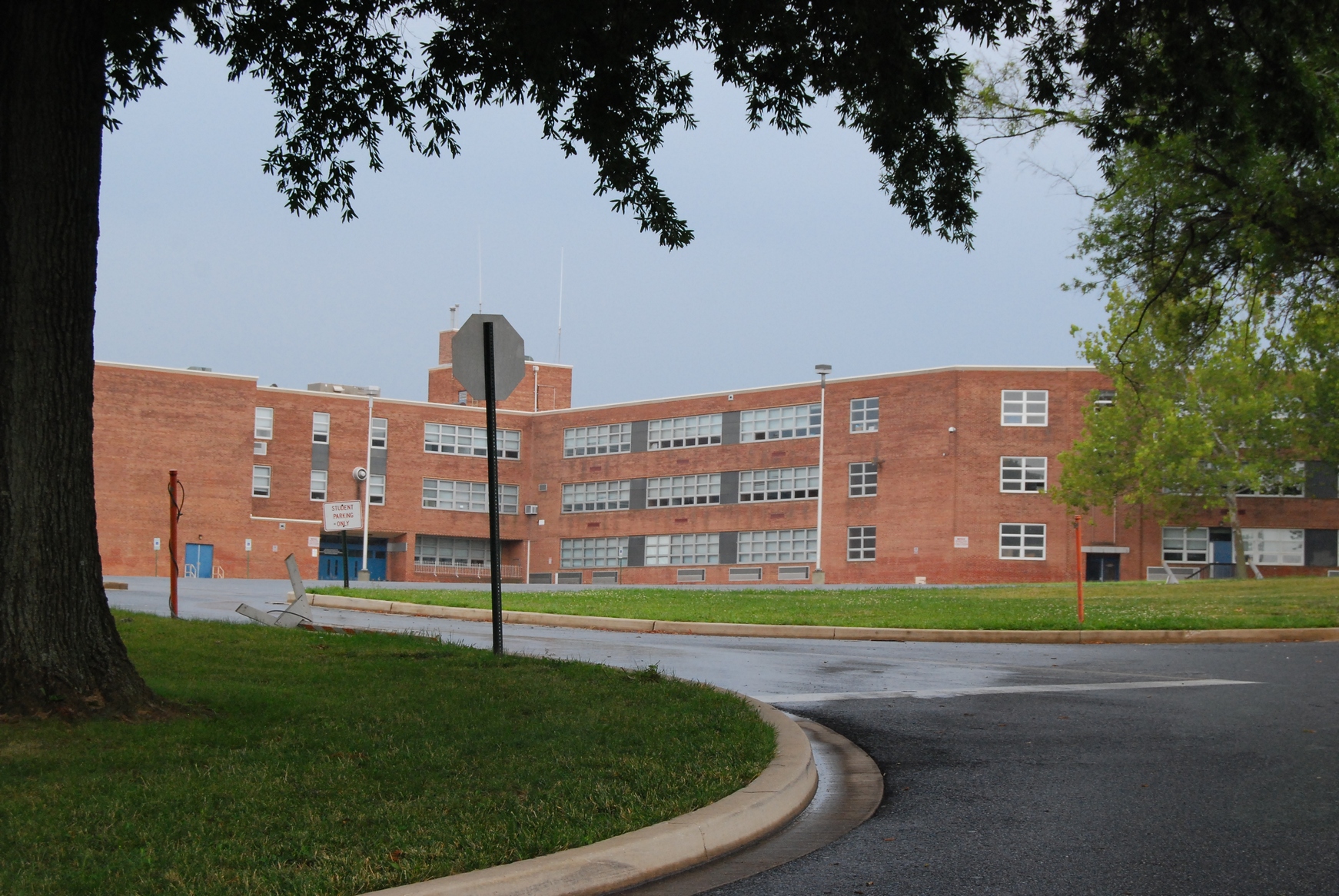
Photo: Kenwood High School, Baltimore County Public Schools
(Wallstreethotrod at English Wikipedia, Public domain photo, via Wikimedia Commons)
Topics
InsurTech
Data Driven
Artificial Intelligence
K-12




Leave a Reply