


AI is not powering the final retail sale, according to a new report from Invoca, a revenue execution enhancement firm. The company’s “B2C Buyer Experience Report 2026” finds that most brands are losing customers before AI ever enters the conversation.
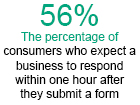
According to the report, the widest gap in the 2026 data is between what consumers expect of a brand’s response time and what they actually receive. The data reveals that 56 percent expect a business to respond within one hour after they submit a form. Only 36 percent actually receive a response within that window, while 79 percent will switch to a competitor that responds faster. Nearly 30 percent move on to a competitor rather than wait when a response is too slow.
Consumers also expect a rapid response when they call businesses. The report found that 75 percent of survey respondents said they have hung up after being put on hold for too long. That’s a 26-point increase from last year, indicating that consumers are becoming significantly less patient.
“AI agents have graduated from experiments to a fundamental business requirement for brands,” said Peter Isaacson, CMO at Invoca. “Consumers expect speed at every turn, and AI can provide it at the most crucial moments when leads drop off and head to the competition. Without fast, smart AI engagement capabilities, you’re relegating yourself to second place.”
Invoca stated that AI is now embedded in the buying journey for nearly every U.S. consumer. When it performs well, brands earn trust. When it falls short, they earn the blame—and face the resulting revenue consequences. Consumers do not distinguish between the technology and the brand that chose to put it in front of them.
The report found that 38 percent of consumers blame the brand alone when an AI interaction goes badly, while only 14 percent blame the AI vendor. Two-thirds hold the brand at least partially accountable, by a margin of nearly 3-to-1.
Consumer sentiment toward brand AI has improved significantly year over year, and the data shows why, the report added. AI has become faster, more polished and more useful, to the point that most consumers no longer notice when they’re interacting with it.
The report found that 46 percent said AI made their experience better, up from 42 percent in 2025, while 18 percent said AI made their experience worse, down from 29 percent. Meanwhile, 63 percent of U.S. consumers can no longer reliably tell when they’re interacting with AI versus a human. Consumers have been clear about how they want AI to appear in the buying journey. They want transparency, access to a human when it matters and AI that understands its role.
Eighty-three percent said it matters that a brand’s AI clearly identifies itself, and 59 percent prefer a human representative when both options are equally available. Additionally, 83 percent said human connection is important during a high-stakes purchase.
The data shows that properly balancing fast AI automation with empathetic human connections is critical. One does not replace the other. AI must be deployed effectively enough that consumers hardly notice it, human assistance must be available whenever needed, and every touchpoint must be connected—from clicks and AI chats to calls and conversions—to create a seamless customer journey.
